
 Image 1 of 1
-
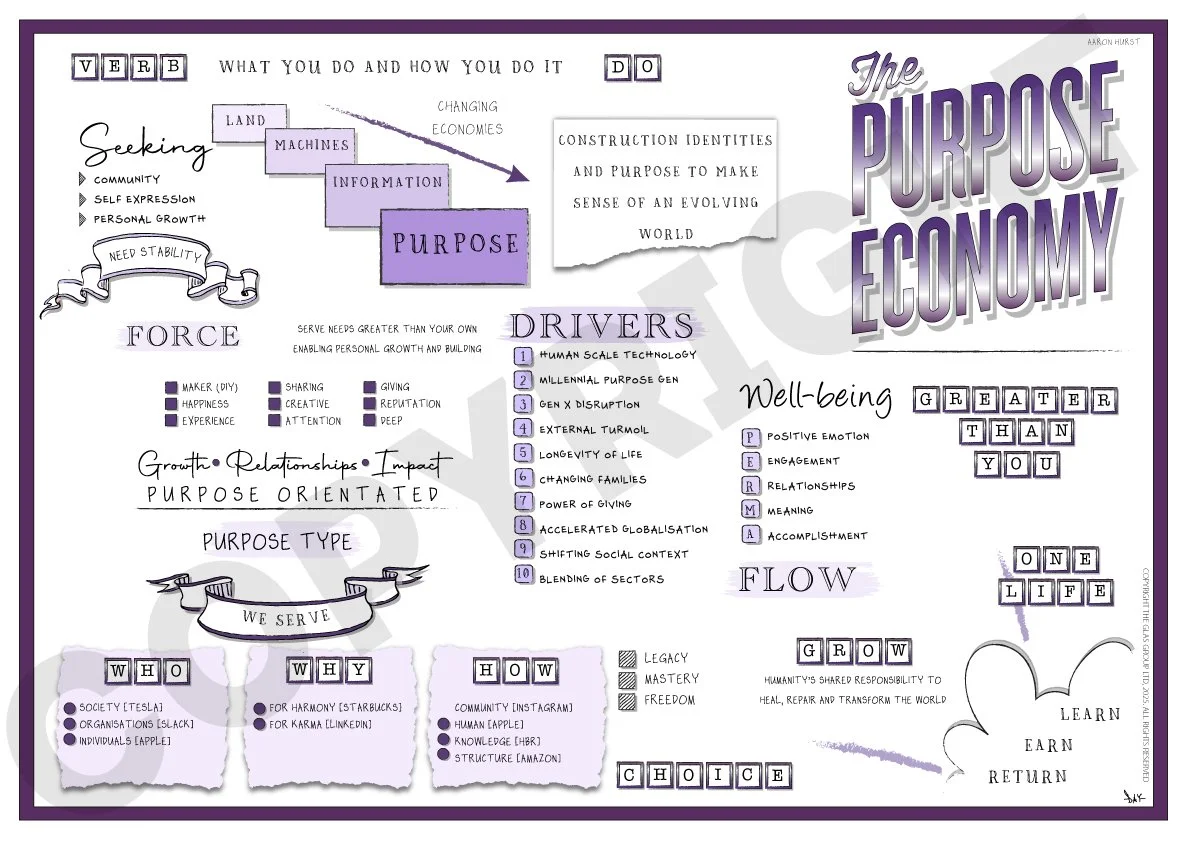
From a GLAS Method perspective, The Purpose Economy powerfully reinforces Purpose / Meaning, Growth / Learning, and Relationships / Connection by anchoring performance and contribution in deeper human motives rather than mechanistic goals. GLAS emphasises that sustainable alignment begins with internal clarity about values and direction; purpose acts as the gravitational force that coheres behaviour, energy, and relationships toward meaningful engagement rather than reactive drift.
The focus on environments that support autonomy, mastery, and connection aligns with the GLAS element of Environment / Context, because purpose‑centred organisations create conditions that preserve energy, encourage psychological safety, and foster collaboration. When people see their work as contribution rather than obligation, they experience less internal conflict and more coherent engagement — strengthening vitality and satisfaction while reducing stress and fragmentation.
Finally, the book underscores the importance of Relationships / Connection and Growth / Learning by showing that purpose is cultivated social‑ly as much as individually. Meaningful contribution is often co‑created through community, mentorship, teamwork, and shared objectives. These relational systems amplify growth and deepen belonging, helping individuals stay aligned with long‑term purpose rather than defaulting to short‑term reactive behaviour. In GLAS terms, such systemic alignment promotes sustained balance across elements rather than a narrow focus on isolated performance metrics.
-
-