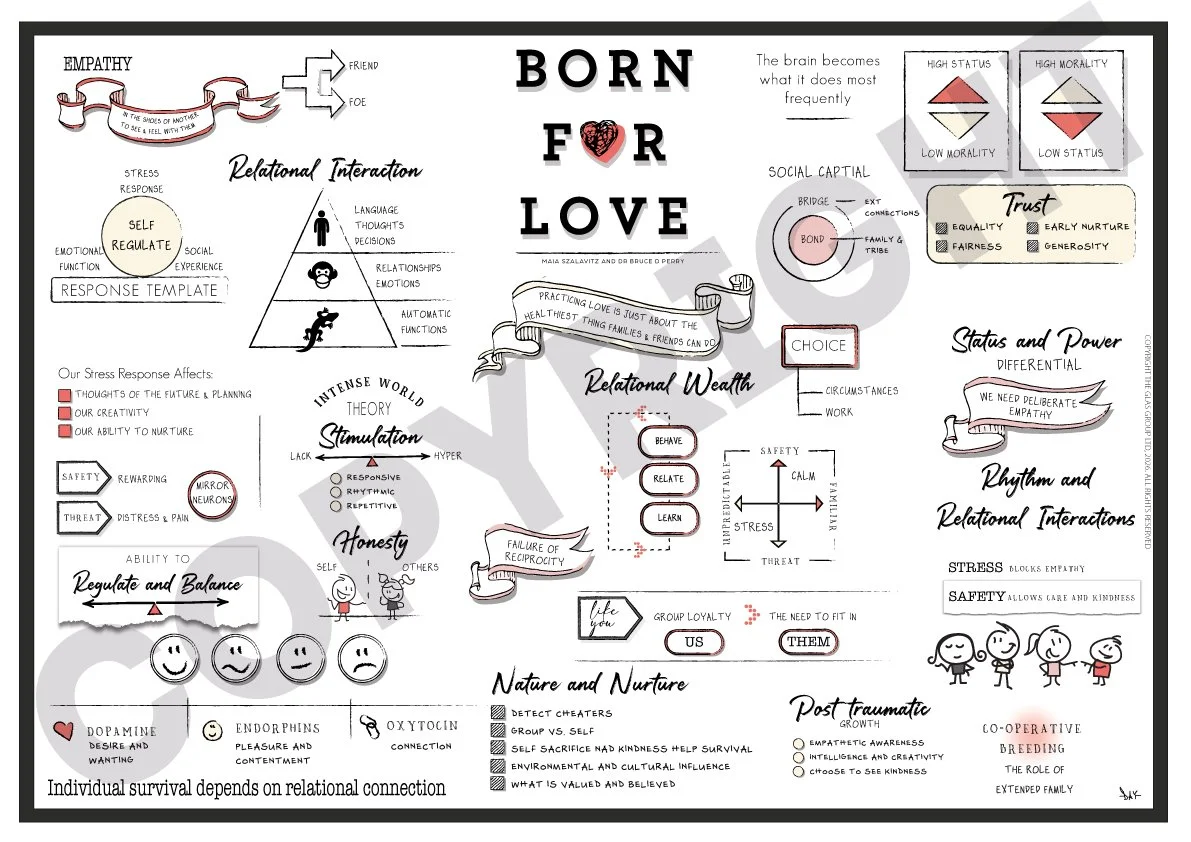
Born For Love (Bruce D. Perry & Maia Szalavitz)

£4.00

Born for Love by Bruce D. Perry and Maia Szalavitz** explores the crucial role of early relationships and attachment in shaping a child’s brain, behaviour, and lifelong capacity for connection. The authors argue that love, safety, and attuned caregiving are foundational to healthy development, influencing emotional regulation, resilience, and social functioning. By understanding the science of attachment, parents, educators, and caregivers can foster environments that nurture thriving, secure, and emotionally healthy children.

Born for Love by Bruce D. Perry and Maia Szalavitz** explores the crucial role of early relationships and attachment in shaping a child’s brain, behaviour, and lifelong capacity for connection. The authors argue that love, safety, and attuned caregiving are foundational to healthy development, influencing emotional regulation, resilience, and social functioning. By understanding the science of attachment, parents, educators, and caregivers can foster environments that nurture thriving, secure, and emotionally healthy children.

  • From a GLAS Method perspective, the book begins with Emotions / Awareness and Centredness. Perry’s work emphasises that emotional and physiological regulation is the foundation for cognition, behaviour, and decision-making. GLAS mirrors this by prioritising awareness and centring before performance or change.

    The book deeply reinforces Strong Connections, Community, and Shaping Relationships. Safe, attuned relationships regulate the nervous system, restore trust, and enable growth. GLAS frames relationships not as support mechanisms alone, but as active systems that shape energy, resilience, and identity.

    Finally, Born for Love aligns with Resilience, Self Acceptance, and Purpose / Meaning. Healing and growth emerge through relational safety, compassion, and meaning-making. When individuals feel seen and valued, they regain access to curiosity, learning, joy, and purposeful contribution — the hallmarks of GLAS integration.