 Image 1 of 1
-
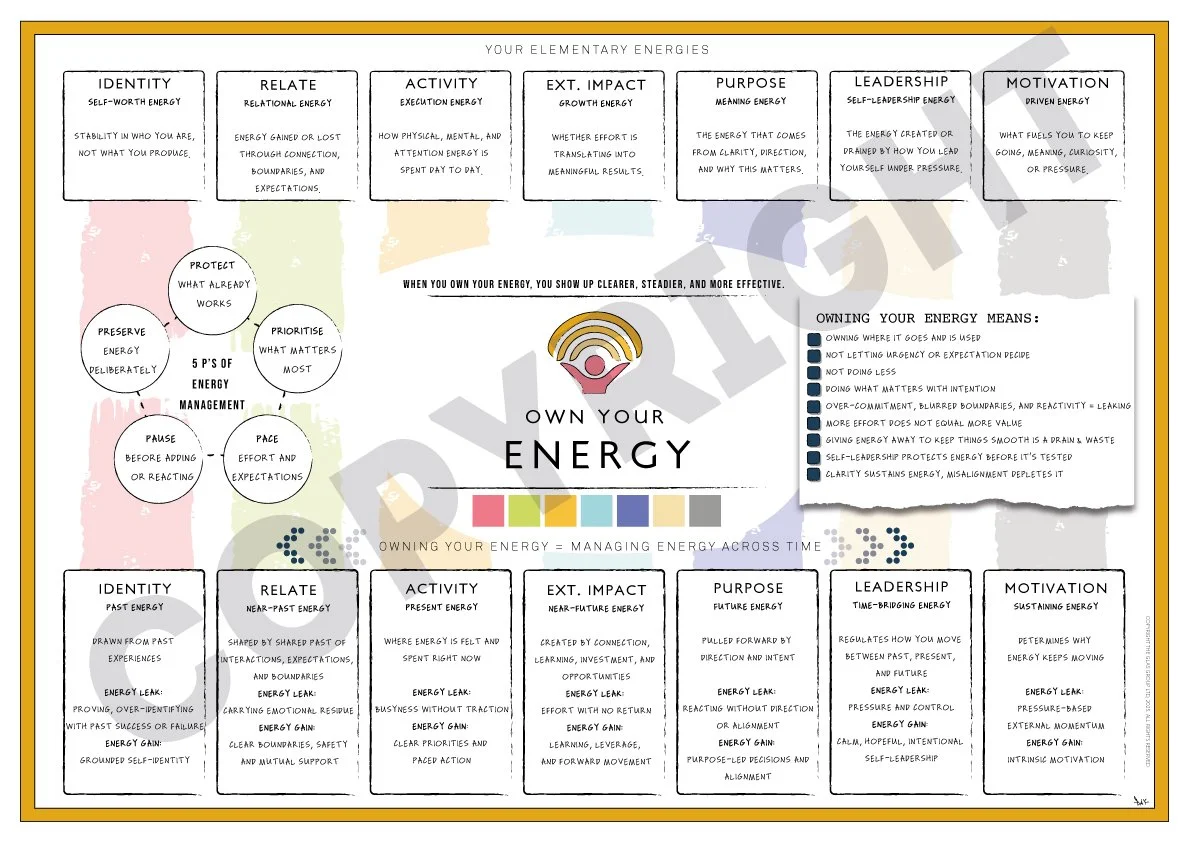
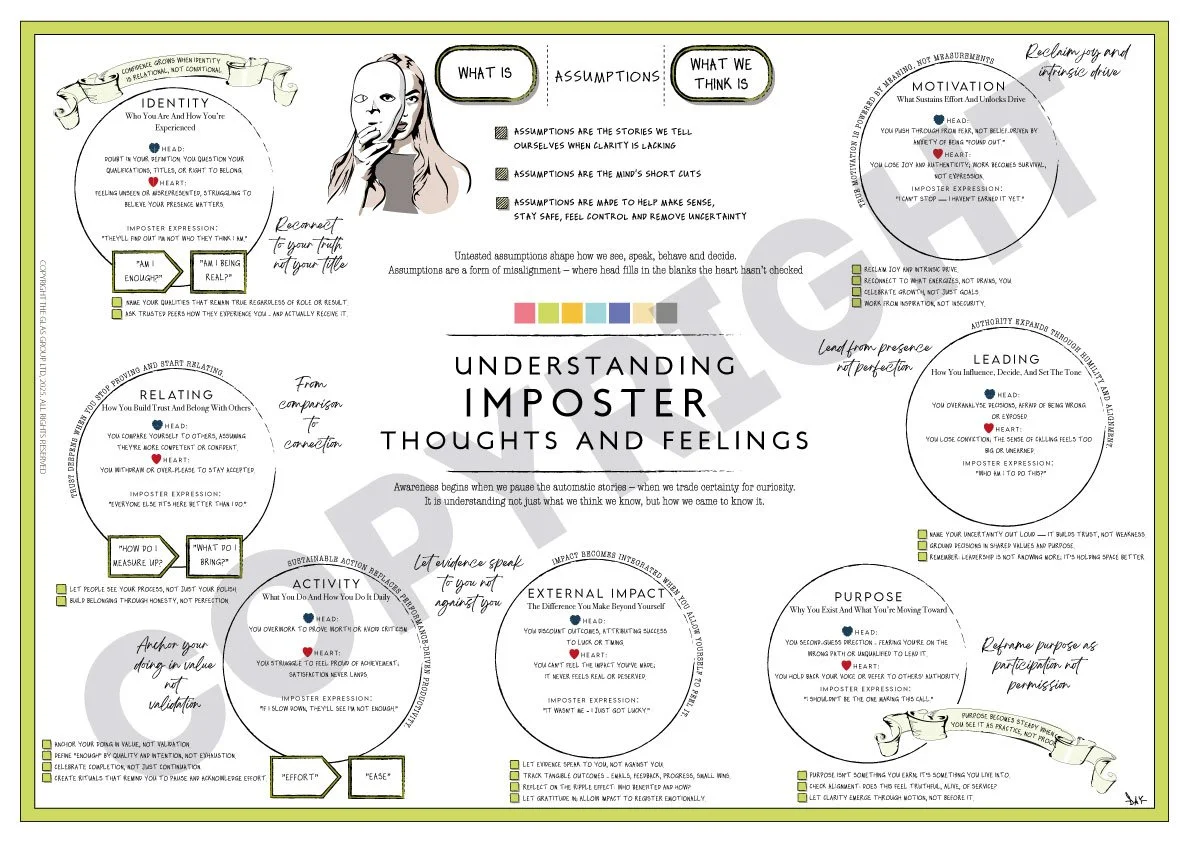
From a GLAS Method perspective, the Imposter Phenomenon intersects with Emotions / Awareness, Growth / Learning, and Purpose / Meaning. Recognizing self-doubt as a signal rather than a flaw encourages reflection, reduces reactive behaviour, and builds internal clarity. Awareness of these feelings helps individuals distinguish perceived inadequacy from actual competence, preventing energy drain caused by overcompensation or avoidance.
The phenomenon also affects Relationships / Connection, as imposter feelings often lead to social withdrawal, reluctance to ask for support, or difficulty collaborating authentically. GLAS emphasizes relational alignment as key to thriving; addressing imposter tendencies within a supportive context allows individuals to engage more authentically, strengthen trust, and reduce relational friction.
Finally, overcoming imposter patterns supports Energy / Vitality and Joy / Fulfilment by redirecting effort from self-protective strategies toward meaningful action. Individuals who align internal awareness with purpose and external behaviour experience greater coherence, resilience, and satisfaction, embodying GLAS’s holistic approach to integrating mind, energy, relationships, and meaning in daily life.
-
Personal Growth – Use it to understand self-doubt and build self-awareness.
Leadership Development – Apply in coaching to reduce imposter-driven decision-making and increase alignment.
Team Alignment – Facilitate discussions to normalize vulnerability and foster psychological safety.
Career Mentorship – Guide mentees to focus on authentic contributions and reduce self-sabotage.
Performance & Wellbeing – Integrate with energy, mindfulness, and stress-management practices to preserve vitality and focus.
-
Pause and Name It – Recognize when imposter feelings arise and label them to reduce unconscious influence.
Reflect and Gather Evidence – Identify triggers, journal experiences, and collect feedback to distinguish perception from reality.
Align Action with Values – Focus on meaningful contributions rather than external approval or fear of judgment.
Leverage Support – Seek mentors, peers, or teams who normalize imperfection and provide encouragement.
Build Confidence Through Small Wins – Set achievable goals and celebrate progress to counter self-doubt.