 Image 1 of 1
-
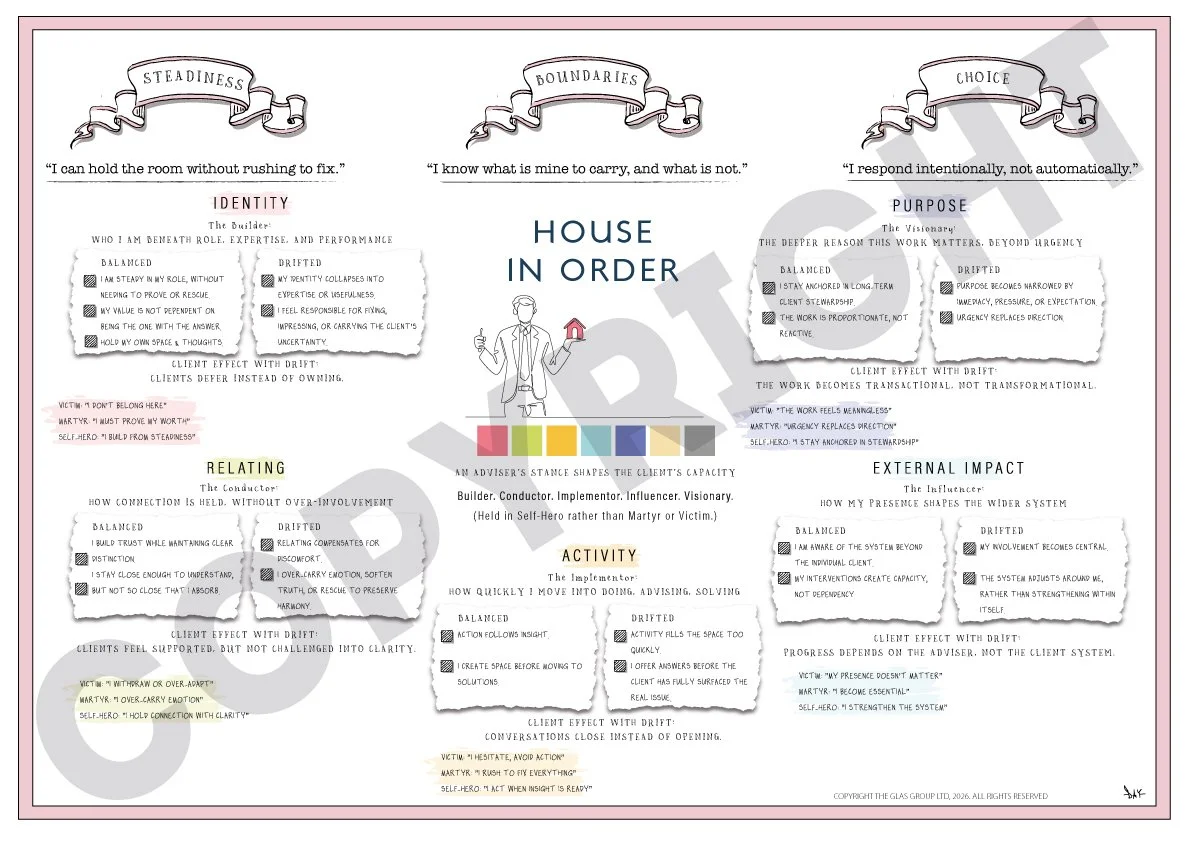
From a GLAS Method perspective, House In Order begins with Harnessing Awareness and Manage Your Energy. Advisors assess both their own systems and the client’s, identifying gaps, redundancies, and sources of friction. Awareness ensures energy is spent on meaningful work rather than chasing confusion.
The practice is strengthened through Holding Focus, Simply Effective, and Leveraging Direction. Streamlined workflows, prioritised actions, and clear documentation make decision-making faster and advice more actionable. GLAS treats order as the foundation of professional effectiveness, not bureaucracy.
Finally, House In Order supports Alignment, Trust Conversations, and Compound Impact. When advisors and clients operate from organised foundations, focus is sustained, energy is preserved, and progress compounds — creating measurable and sustainable value over time.
-
Client Engagements – Deliver advice confidently with minimal friction.
Internal Operations – Preserve advisor energy and focus.
Team Coordination – Ensure smooth collaboration and handovers.
Strategic Planning – Provide a solid foundation for long-term decisions.
Trust & Credibility – Reinforce client confidence through reliability.
-
Audit Systems & Information – Identify gaps and redundancies.
Prioritise Actions – Clarify what is essential for clients and self.
Create Clear Processes – Standardise workflows and responsibilities.
Document & Communicate – Make systems transparent for the team and clients.
Review & Update Regularly – Keep structures current as context changes.