 Image 1 of 1
-
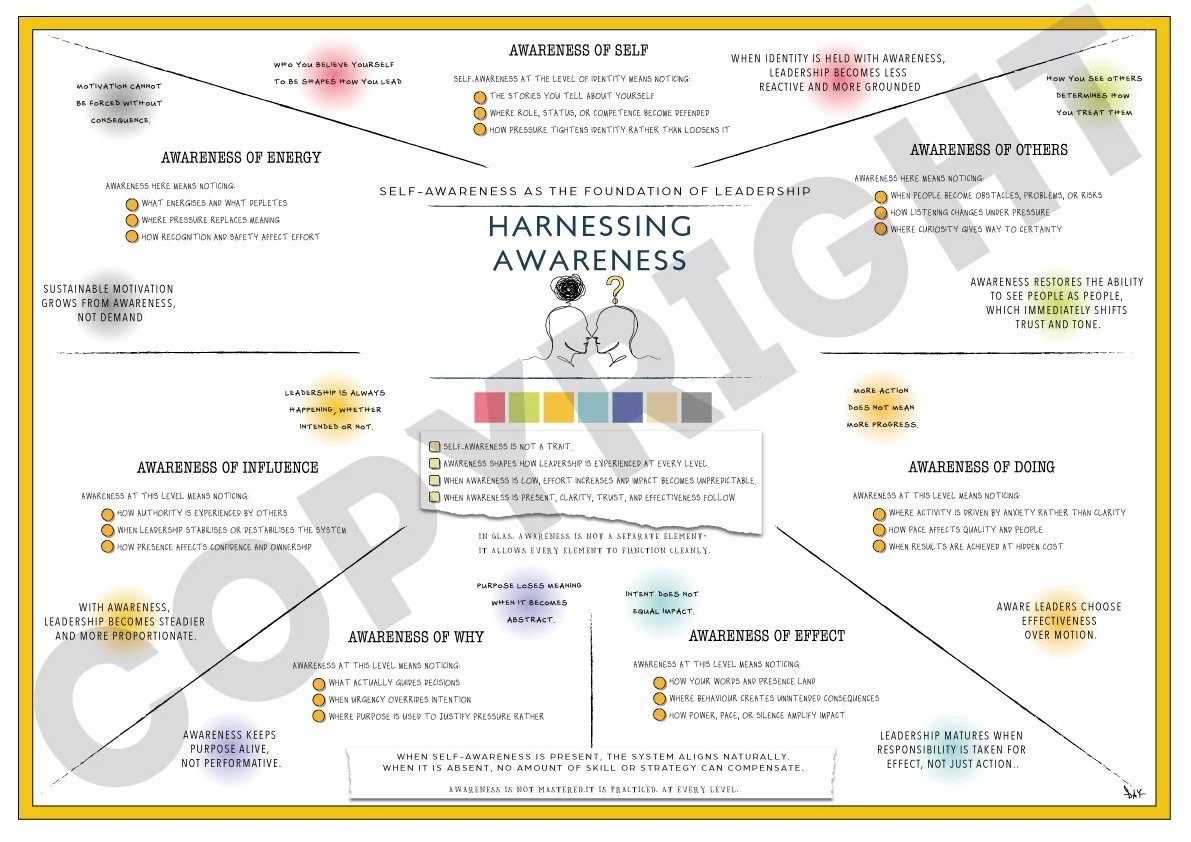
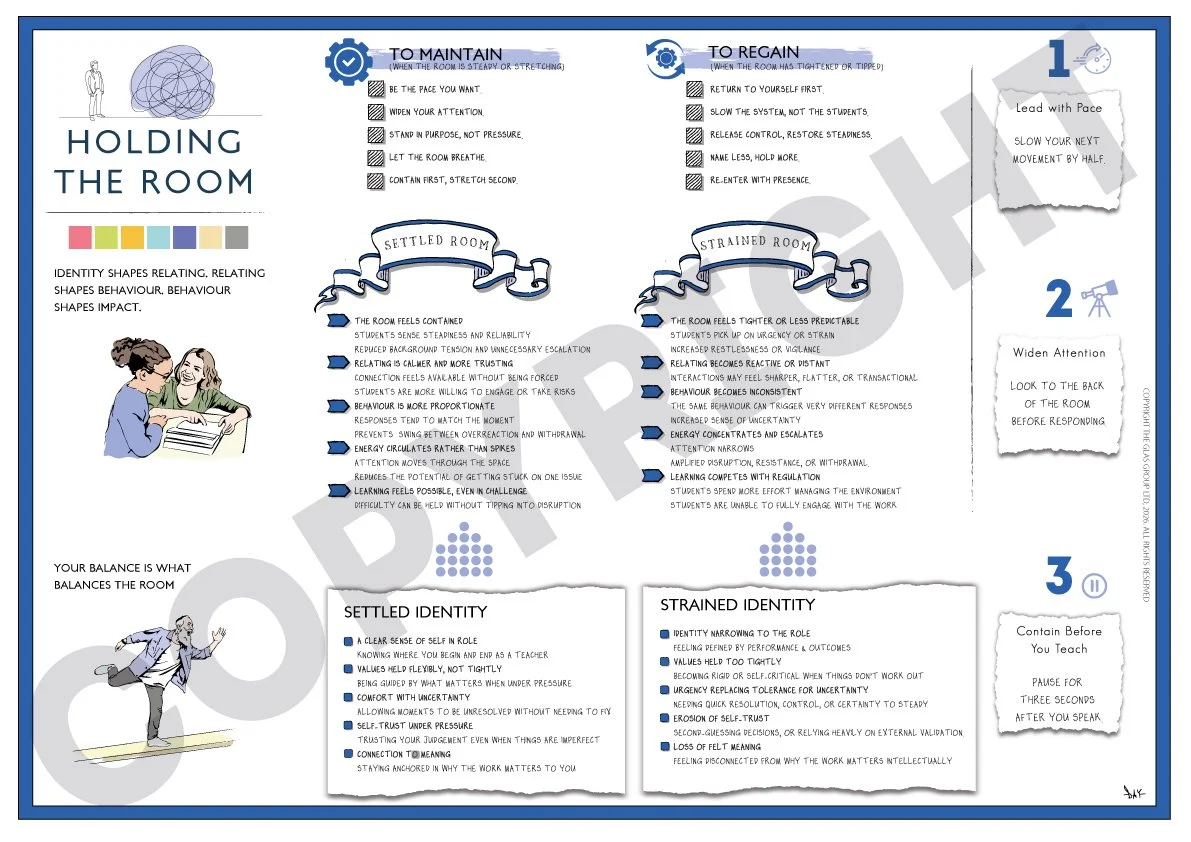
From a GLAS Method perspective, Holding the Room begins with Centredness and Harnessing Awareness. A teacher’s internal state sets the emotional tone of the classroom. When educators are grounded and aware, they respond intentionally rather than reactively, modelling regulation and calm under pressure.
The practice is reinforced through Strong Connections, Trust Conversations, and Together. Relationships regulate behaviour; students are more likely to engage and self-regulate when they feel respected, understood, and connected. GLAS reframes classroom management as relational alignment rather than enforcement.
Finally, Holding the Room supports Energy / Vitality, Purpose / Meaning, and Joy / Fulfilment. A regulated classroom preserves teacher energy, reduces burnout, and reconnects educators with the meaning of their work. When the room is held well, teaching becomes sustainable and rewarding rather than draining.
-
Classroom Management – Reduce disruption without escalating control.
Student Engagement – Create focus and psychological safety for learning.
Teacher Wellbeing – Preserve energy and prevent burnout.
Trauma-Informed Practice – Regulate nervous systems before discipline.
Professional Development – Train presence, not just pedagogy.
-
Centre Yourself First – Pause, breathe, and ground before addressing the class.
Scan the Room – Notice energy, attention, and emotional signals.
Set Clear, Calm Boundaries – Use consistent language and tone.
Reconnect Before Redirecting – Acknowledge students before correcting behaviour.
Reflect & Reset – Review what worked and adjust for next time.