 Image 1 of 1
-
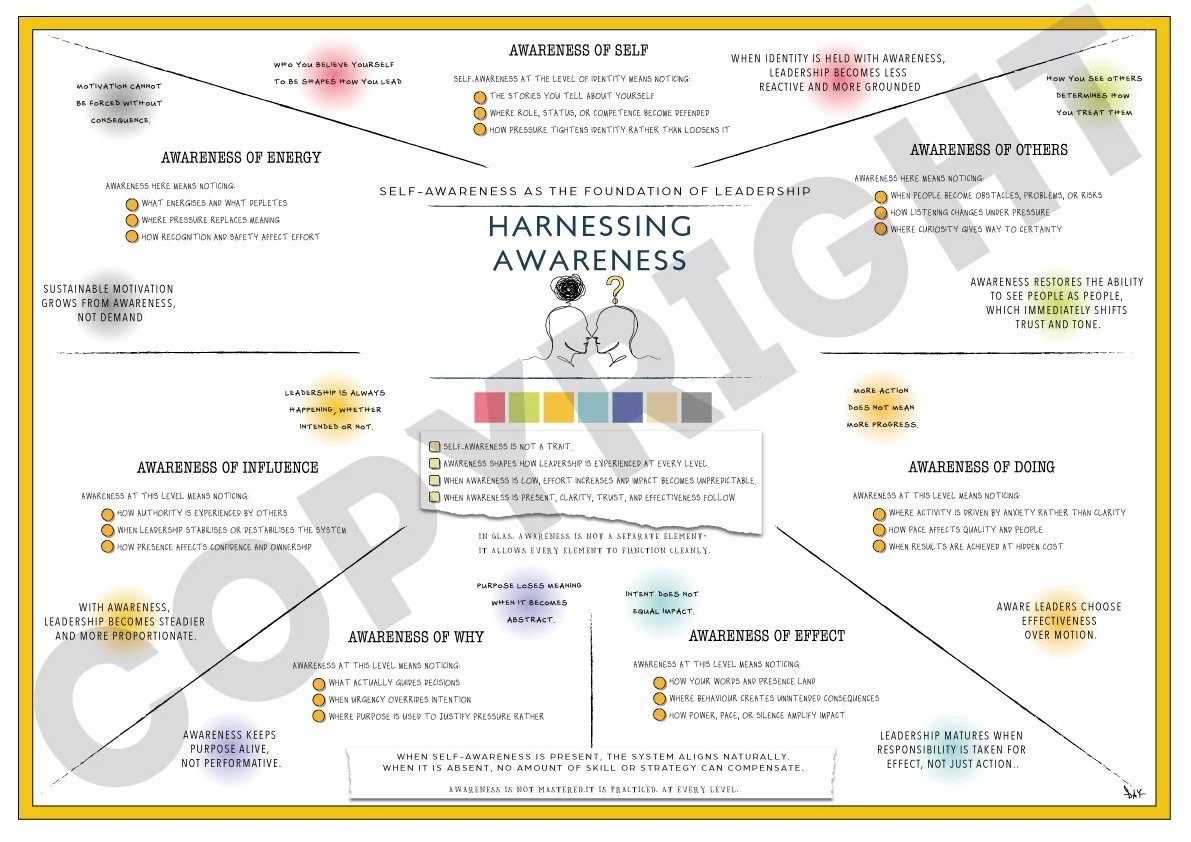
From a GLAS Method perspective, Harnessing Awareness begins with Self Acceptance and Emotions / Awareness. Leaders must first understand their own triggers, strengths, and limitations before they can effectively guide others. Awareness of internal states prevents projection and bias in decision-making.
The practice is strengthened through Holding Focus, Shaping Relationships, and Trust Conversations. Leaders who are aware of both themselves and their team dynamics can address tensions, build psychological safety, and align energy toward shared objectives. GLAS treats awareness as a leadership tool, not a philosophical exercise.
Finally, Harnessing Awareness supports Alignment, Energy / Vitality, and Compound Impact. Awareness informs where attention is needed, when to intervene, and how to amplify strengths. Leaders who harness awareness consistently create ripple effects of engagement, trust, and effectiveness throughout their teams.
-
Leadership Development – Build self-regulation and strategic presence.
Team Alignment – Understand dynamics and guide effectively.
Conflict Resolution – Respond with clarity rather than reactivity.
Decision-Making – Make informed, situationally aware choices.
Sustainable Performance – Preserve energy and influence over time.
-
Notice Internal States – Track thoughts, emotions, and physical signals.
Observe the Environment – Scan team dynamics, culture, and external factors.
Reflect Before Reacting – Pause to interpret signals before responding.
Act Intentionally – Align actions with purpose, values, and situational insight.
Review & Adjust – Reflect on outcomes to strengthen future awareness.