 Image 1 of 1
-
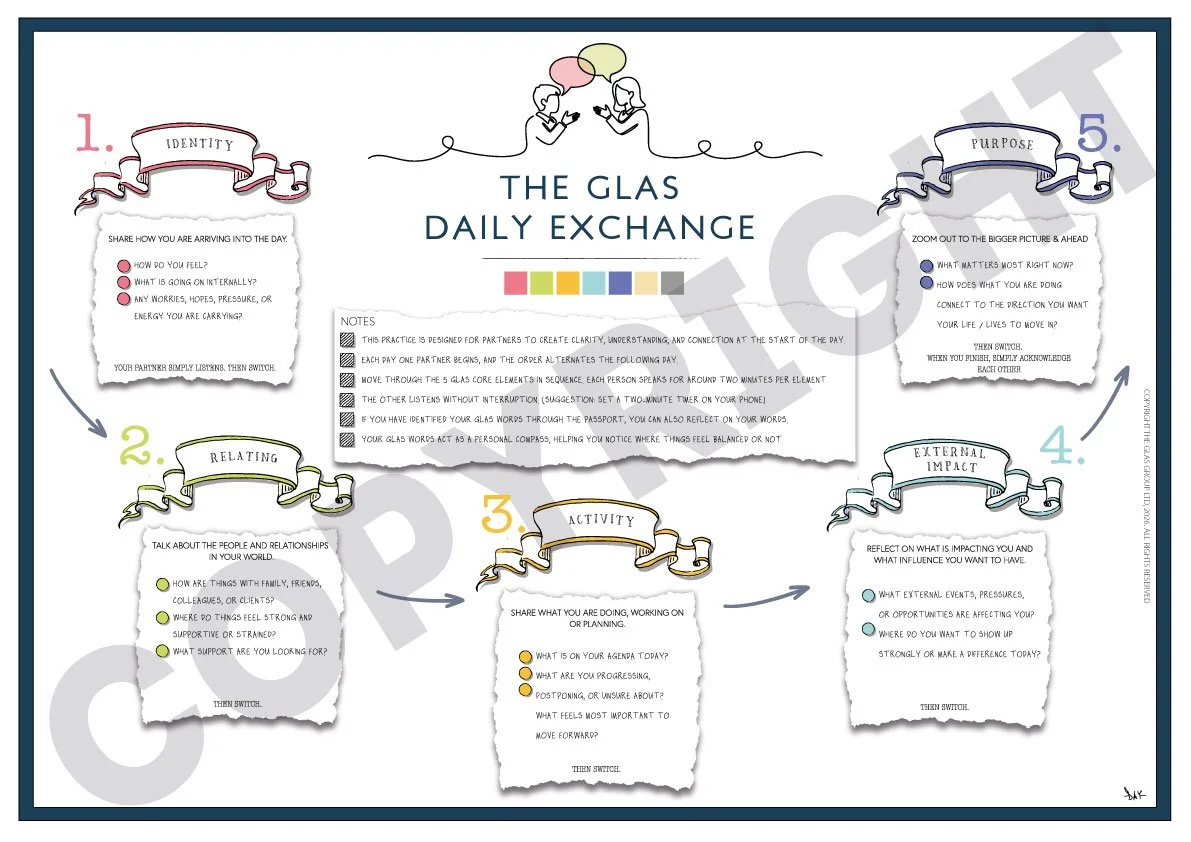
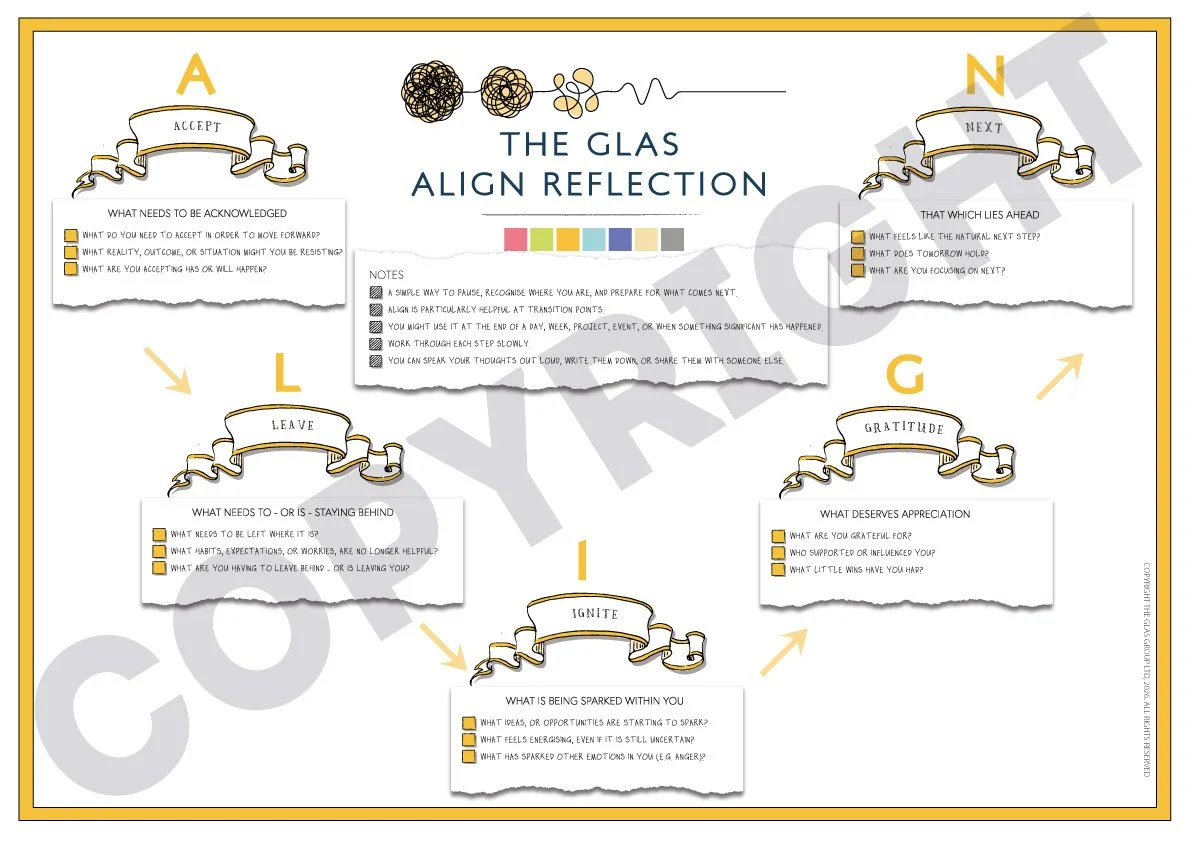
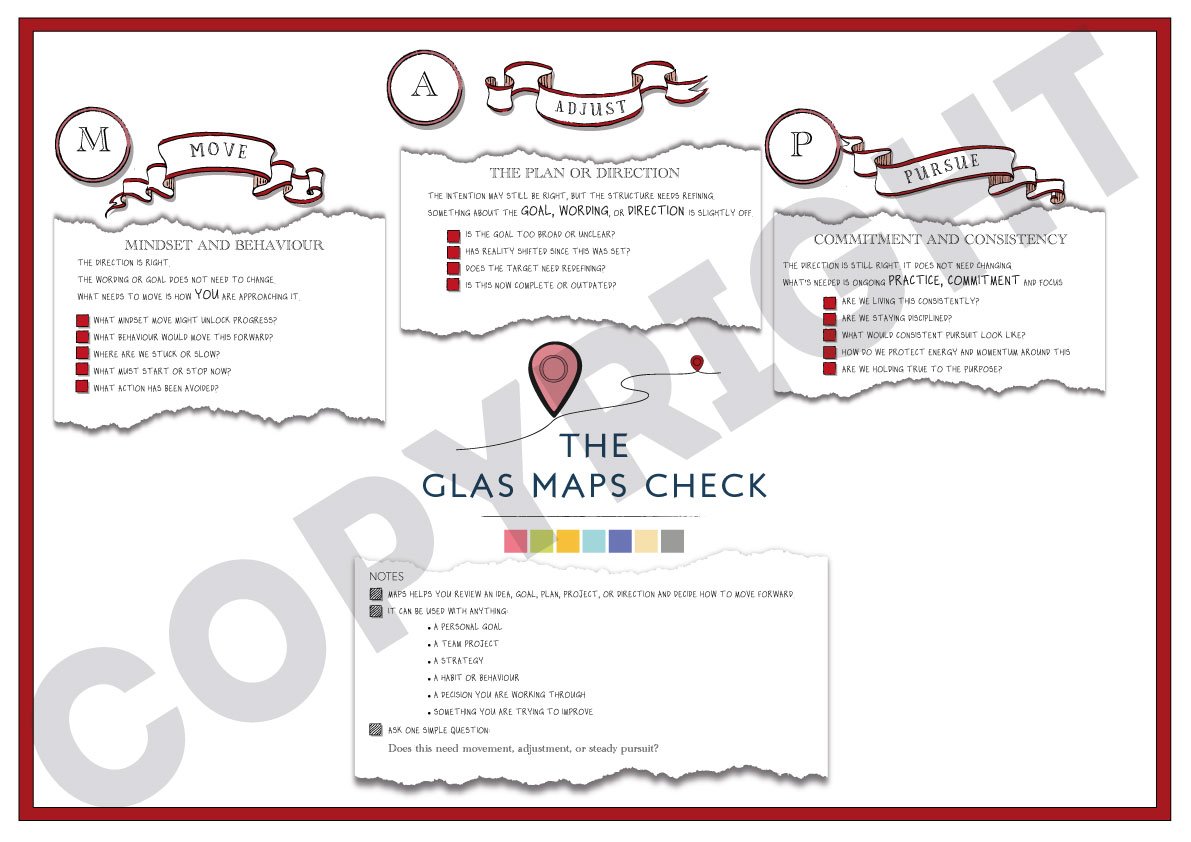
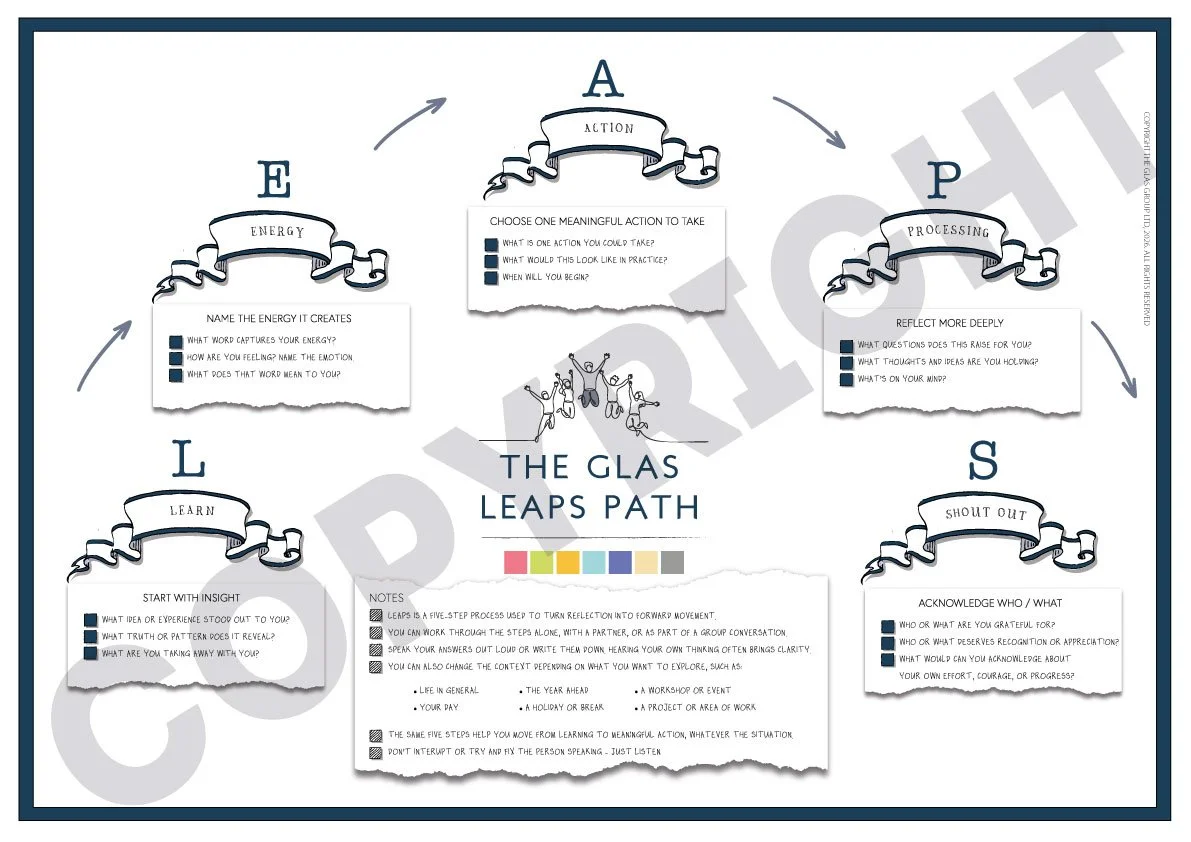
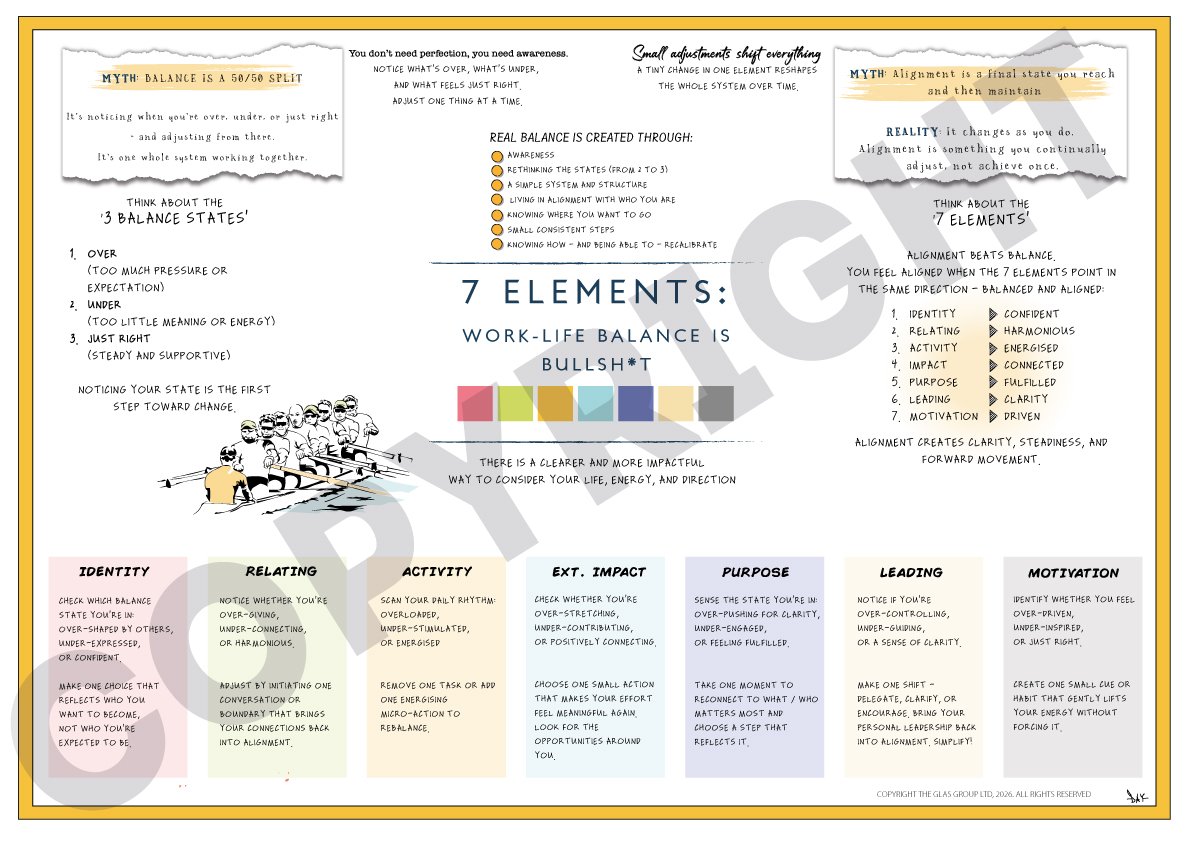
From a GLAS Method perspective, alignment begins with Emotions / Awareness, Growth / Learning, and Purpose / Meaning. Emotional awareness allows individuals to notice internal signals before they drive reactive behaviour, while growth reframes challenge as development rather than failure. Purpose anchors action in meaning, ensuring effort is directed toward what genuinely matters rather than what is merely urgent or externally rewarded.
The GLAS Vision also emphasizes Relationships / Connection and Environment / Context as critical external forces shaping alignment. Relationships influence trust, safety, and collaboration, while environment determines whether aligned behaviour is supported or resisted. GLAS recognises that misalignment often persists not because of lack of capability, but because people are operating in contexts that drain energy, distort priorities, or reward disconnection.
Finally, alignment across the system restores Energy / Vitality and Joy / Fulfilment. When emotions are regulated, purpose is clear, relationships are healthy, and environments are supportive, energy is no longer wasted on self-protection or friction. Joy and fulfilment emerge not as outcomes to chase, but as signals that the system is functioning coherently — reinforcing GLAS’s holistic approach to integrating mind, energy, relationships, and meaning in daily life.
-
Personal Alignment – Navigate life decisions with clarity, balance, and resilience.
Leadership Development – Lead with coherence across emotion, energy, and purpose.
Team & Culture Design – Build environments that support trust and sustainable performance.
Coaching & Mentorship – Diagnose misalignment and guide intentional growth.
Wellbeing & Performance – Sustain fulfilment without burnout or fragmentation.
-
Assess Alignment – Reflect on which GLAS elements feel strong or depleted.
Build Awareness – Notice emotional, energetic, and relational signals daily.
Clarify Purpose – Anchor decisions in values rather than pressure or habit.
Adjust Environment – Redesign routines, relationships, or contexts that create friction.
Rebalance Continuously – Treat alignment as an ongoing practice, not a fixed state.