
 Image 1 of 1
-
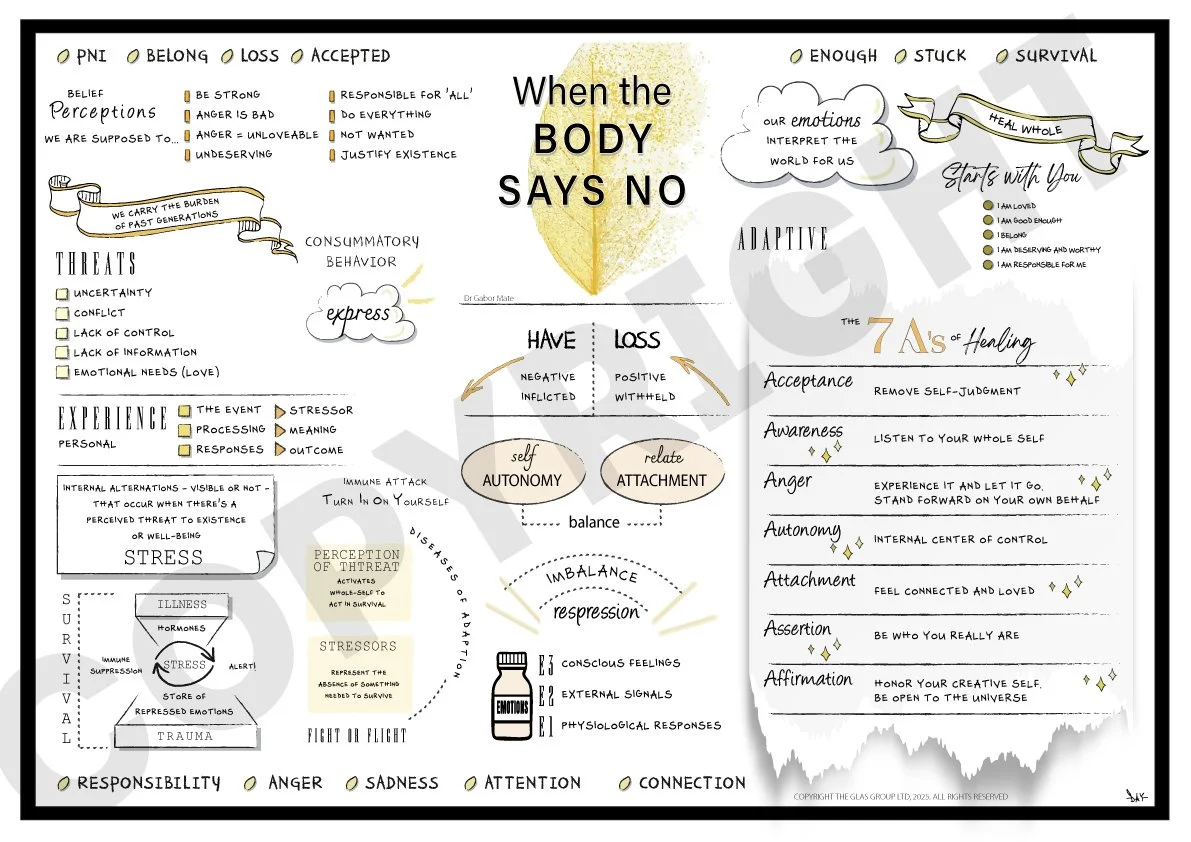
From a GLAS Method perspective, When the Body Says No deeply reinforces Emotions / Awareness, Energy / Vitality, and Purpose / Meaning by illuminating how unacknowledged emotional states shape physiological and behavioural outcomes. GLAS emphasises that internal awareness — noticing feelings, stress responses, and unmet needs — is foundational to aligned action and sustainable performance. Maté’s work shows that when emotional realities are ignored or suppressed, internal misalignment can become physically embodied, leading to chronic energy drain, illness, and disconnection from purpose.
The book’s focus on patterns like over‑adaptation and self‑silencing challenges leaders and individuals to examine how emotional avoidance affects relationships and performance. Suppressing needs for the sake of external expectations weakens relational connection and increases internal friction, which in GLAS terms is a core source of drift. When individuals develop greater emotional literacy and self‑compassion, they preserve cognitive and physiological energy, enabling more coherent engagement with life’s demands and greater resilience.
Finally, When the Body Says No reshapes Environment / Context by inviting organisational and cultural change: environments that reward self‑sacrifice, perfectionism, or relentless output at the expense of wellbeing contribute to systemic imbalance. GLAS emphasises shaping contexts that sustain aligned behaviour rather than undermine it, and Maté’s work echoes that: psychological safety, emotional honesty, and compassionate norms are not optional but central to long‑term vitality and fulfilment. Recognising the mind‑body link helps individuals and systems design contexts that protect both psychological and physical alignment.
-
-