
 Image 1 of 1
-
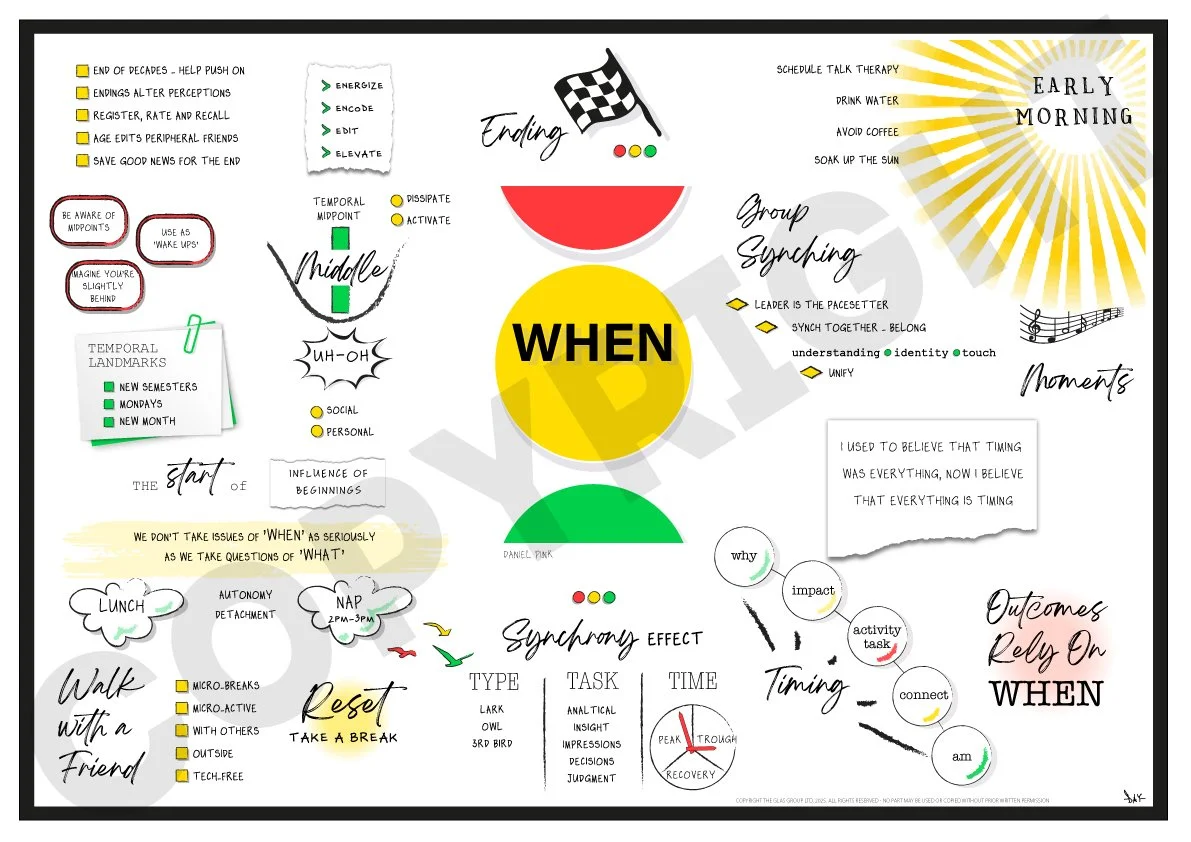
From a GLAS Method perspective, When strengthens Energy / Vitality, Emotions / Awareness, and Growth / Learning by helping individuals understand and optimise their temporal rhythms — the natural fluctuations of energy, focus, and mood that influence behaviour. GLAS emphasises alignment between internal state and external action; Pink’s work provides evidence‑based insight into when internal states are most conducive to specific types of action. This awareness enables better alignment of daily routines with personal capacity, reducing drift caused by mistimed effort and preserving cognitive and emotional energy.
The book’s focus on timing also enhances Energy / Vitality because scheduling tasks in harmony with chronobiological patterns helps reduce stress, avoid burnout, and enhance productivity without force or resistance. When individuals honour their natural peaks and troughs — for focus, creativity, or rest — they engage more efficiently and avoid the depletion associated with misaligned effort. In GLAS terms, this “when‑aware” scheduling creates coherence between physiology and behaviour, supporting sustained performance and wellness.
Finally, When contributes to Emotions / Awareness and Growth / Learning by bringing timing awareness into decision‑making and personal design. Understanding how beginnings, middles, and endings shape motivation allows individuals to plan transitions, set milestones, and cultivate momentum with psychological insight. This form of self‑awareness enhances not just productivity but emotional regulation and intentional growth — reducing reactive responses to fatigue or stress and enabling meaningful engagement with both personal and professional goals.
-
-