
 Image 1 of 1
-
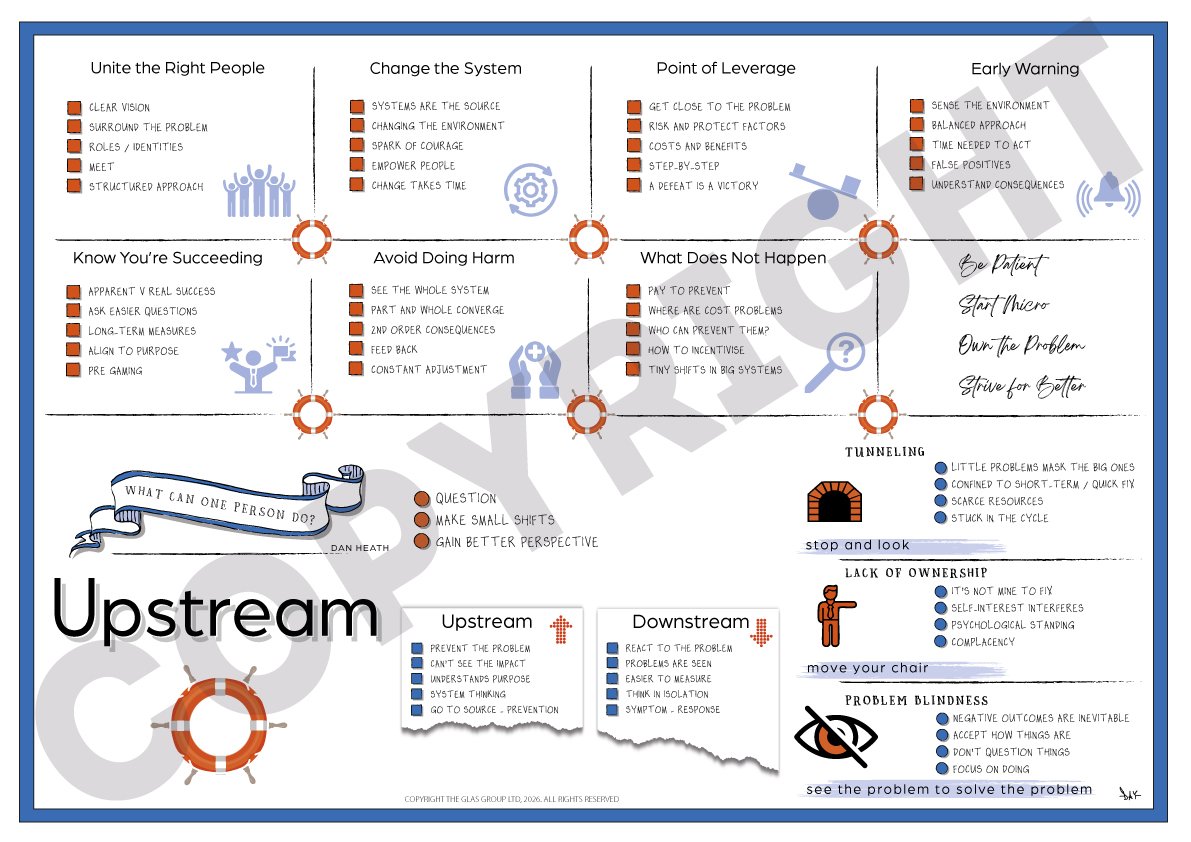
From a GLAS Method perspective, Upstream reinforces Environment / Context, Growth / Learning, and Purpose / Meaning by advocating for systems designed to prevent misalignment rather than merely respond to its consequences. GLAS emphasises shaping contexts that sustain alignment across internal states and external actions; Heath’s upstream framework does the same at a systemic level — moving from reactive patchwork to intentional design that anticipates drift, reduces harm, and preserves coherence.
The book’s focus on early signals and tripwires aligns with Emotions / Awareness and Energy / Vitality, because it encourages individuals and organisations to notice subtle signs of misalignment before they escalate into crises. This relational awareness — not waiting for obvious breakdowns — conserves energy that would otherwise be spent managing preventable chaos. It also deepens understanding of how patterns emerge, enabling reflection and adaptation rather than compounding stress and depletion.
Finally, Upstream contributes to Growth / Learning and Purpose / Meaning by reframing effectiveness not as heroically fixing problems, but as thoughtfully designing systems where problems are less likely to arise. This shifts motivation from short‑term performance to long‑term stewardship, aligning daily work with values that prioritise prevention, resilience, and wellbeing. In GLAS terms, upstream thinking strengthens environments where alignment across elements — purpose, connection, energy, and awareness — becomes more natural and sustained rather than reactive and fragmented.
-
-