
 Image 1 of 1
-
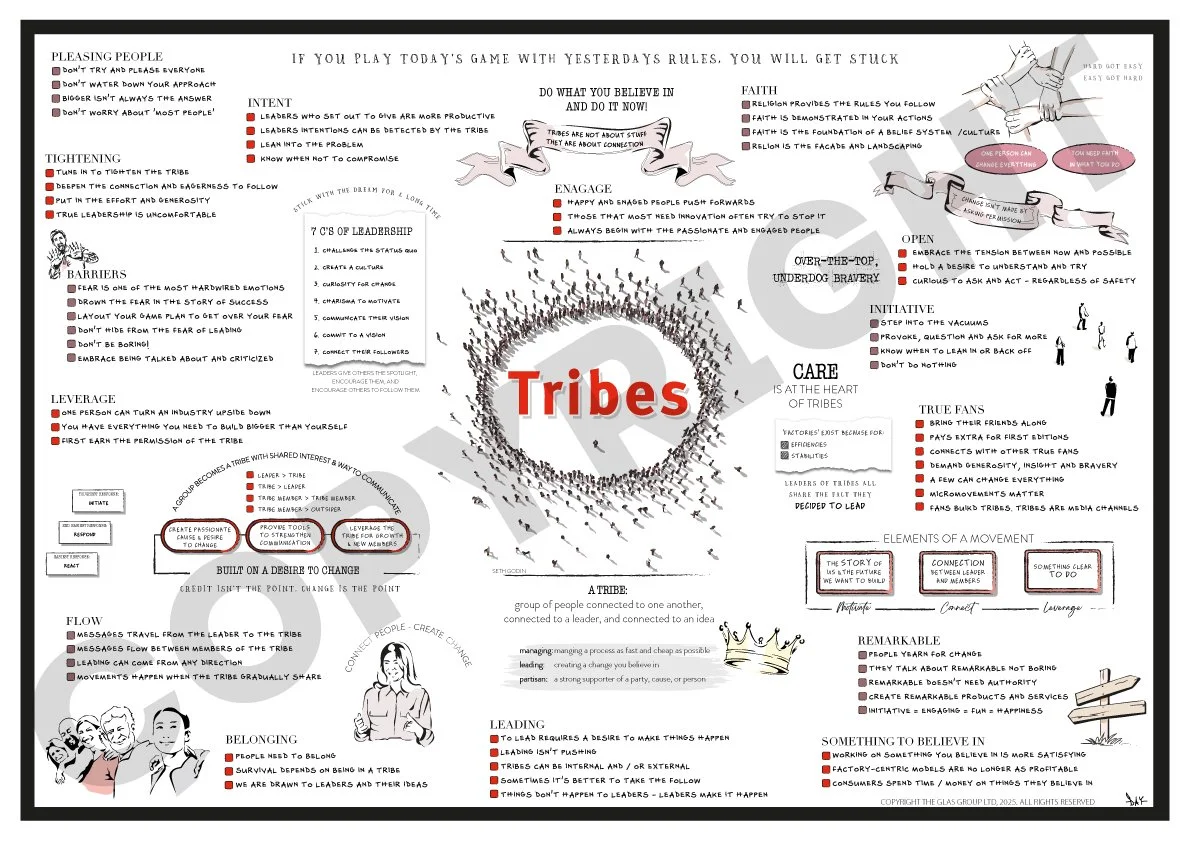
From the GLAS Method perspective, Tribes strengthens Purpose / Meaning, Relationships / Connection, and Environment / Context by showing how shared purpose and relational engagement create aligned, high‑impact communities. GLAS emphasises that personal and collective fulfilment arises when internal intention coheres with behaviour; Tribes expands this by showing how that coherence can be extended into social groups where alignment becomes shared and generative rather than isolating or transactional.
The book’s focus on relational influence — not authority — aligns with Relationships / Connection because effective tribe leaders cultivate empathy, listening, and psychological safety. When people feel genuinely seen and included, they invest energy, trust, and creativity rather than reactively withdraw or fracture their attention. In GLAS terms, relational connection is a force multiplier that preserves emotional energy and supports cohesive action toward shared goals.
Finally, Tribes reshapes Environment / Context by illustrating how cultural norms, communication patterns, and shared values shape group behaviour. A tribe with a clear purpose and inviting context naturally supports alignment across members’ intentions, decisions, and actions. This contextual design — the rituals, narratives, and norms of a tribe — helps individuals feel anchored and connected, strengthening coherence across GLAS elements rather than allowing fragmentation or drift.
-
-