
 Image 1 of 3
 Image 2 of 3
Image 3 of 3
Image 2 of 3
Image 3 of 3
-
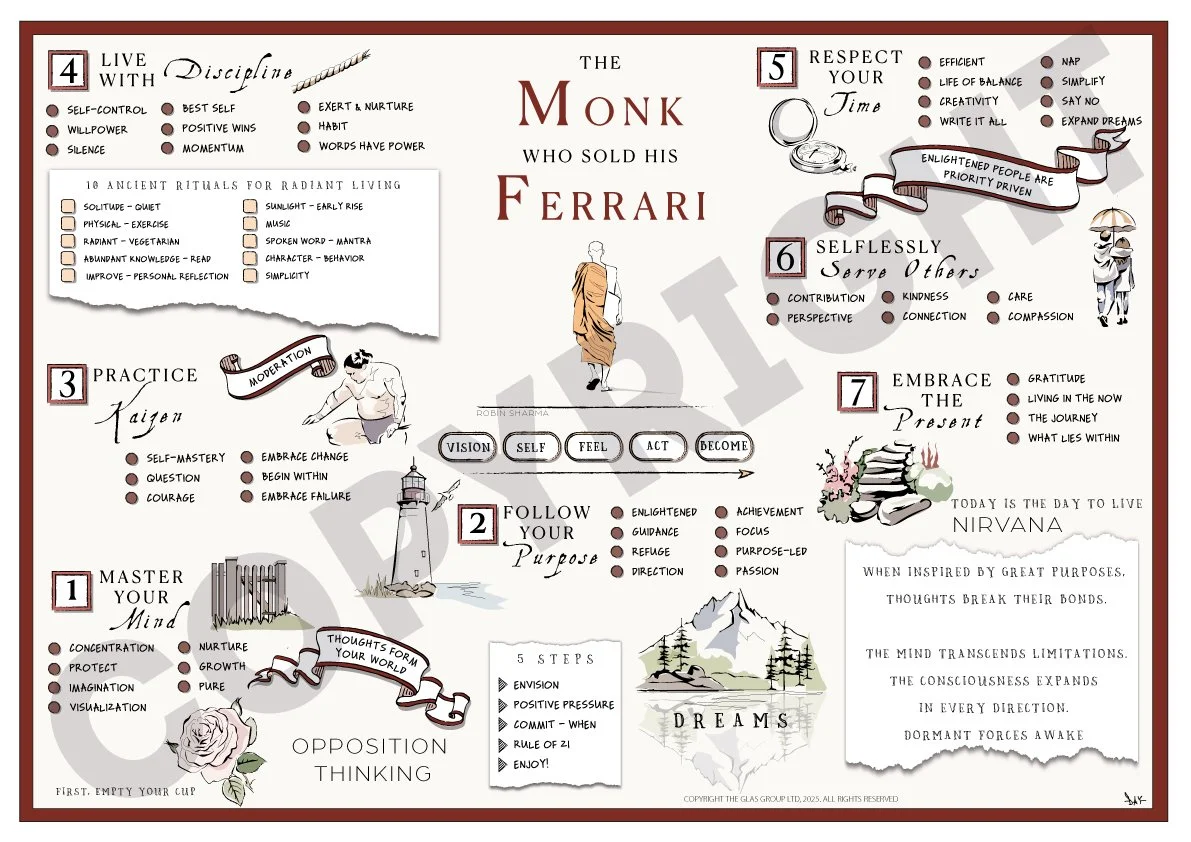
From the GLAS Method perspective, The Monk Who Sold His Ferrari profoundly reinforces Purpose / Meaning, Energy / Vitality, and Emotions / Awareness by guiding readers toward internal clarity and intentional, value-aligned living. The story’s emphasis on living with purpose mirrors GLAS’s core insistence that clarity of intention anchors behaviour and prevents drift into reactive, externally driven patterns. When people align with a personal north star, their energy is conservatively and coherently directed — reducing stress and internal conflict.
The book’s focus on holistic practices — mindfulness, reflection, disciplined habits, and physical stewardship — strengthens Energy / Vitality and Emotions / Awareness. By cultivating practices that calm the mind, regulate emotion, and support physical wellbeing, individuals enhance their capacity for sustained focus, presence, and resilience. In GLAS terms, this internal tuning prevents compensatory behaviours and emotional depletion, preserving energy for aligned performance and enriched experience.
Finally, the teachings about relationships, service, and simplicity support Relationships / Connection and Joy / Fulfilment by reminding readers that deep engagement with others and appreciation for life’s simple pleasures fuel lasting satisfaction. The story’s journey from external success to inner fulfilment reflects GLAS’s holistic view that alignment across life domains — not isolated optimisation — produces balanced, meaningful outcomes that resonate internally and outwardly.
-
-