
 Image 1 of 1
-
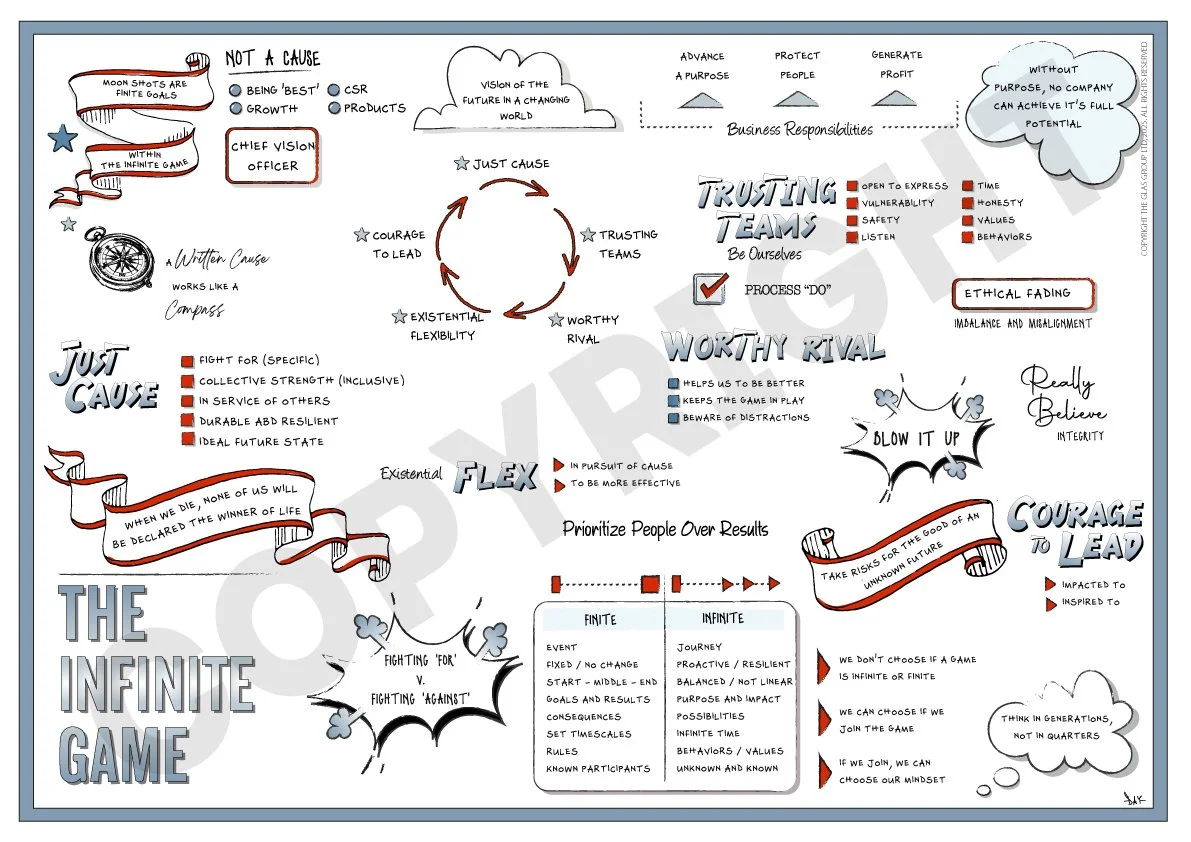
From a GLAS Method perspective, The Infinite Game reinforces Purpose / Meaning, Environment / Context, and Relationships / Connection by encouraging long-term thinking that aligns choice, behaviour, and impact with foundational values. When leaders adopt an infinite mindset, they prioritise enduring contribution over fleeting achievements — a shift that mirrors GLAS’s emphasis on coherent, balanced engagement rather than reactive, short-term performance. This alignment fosters resilience and steadiness across life and organisational systems.
The concept of just cause directly supports Purpose / Meaning, providing a clear compass that guides resource allocation, decision-making, and identity over time. When purpose guides action, individuals and teams avoid the energy drain caused by chasing superficial wins, reducing drift across the GLAS elements. Trusting teams and psychological safety strengthen Relationships / Connection, enabling honest dialogue, mutual support, and collaborative growth — all critical for sustained alignment and collective wellbeing.
Additionally, an infinite mindset shapes Environment / Context by creating cultures that value learning, adaptation, and contribution over mere metrics. These contexts reduce pressure for immediate compliance and optimisation, freeing energy and attention for meaningful exploration and strategic growth. In GLAS terms, such environments amplify vitality, purpose, and relational coherence, making it easier to maintain balance over the long term rather than fragmenting under short-term stressors.
-
-