
 Image 1 of 1
-
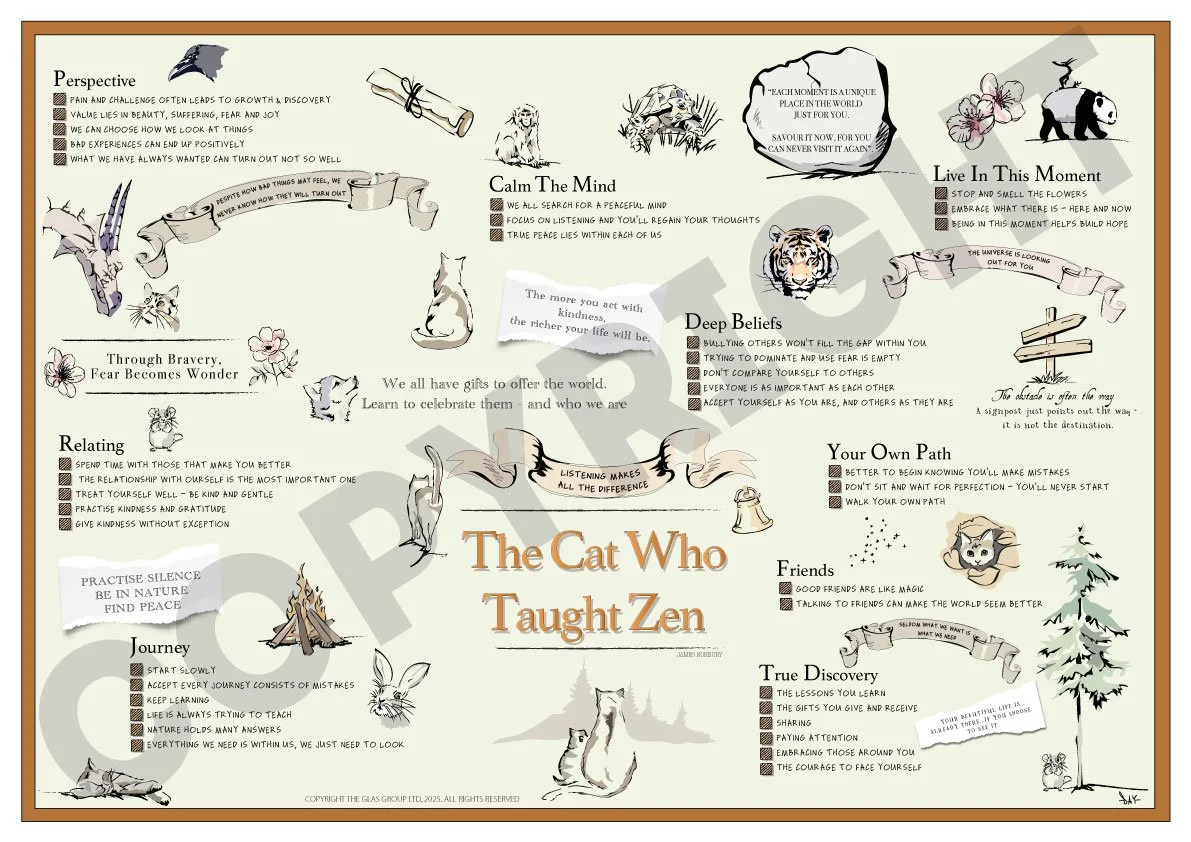
From the GLAS Method perspective, The Cat Who Taught Zen strongly nurtures Emotions / Awareness, Joy / Fulfilment, and Energy / Vitality by guiding readers toward present-moment awareness and emotional clarity. GLAS emphasises noticing internal states before they drive compensatory behaviour like avoidance, overthinking, or reactivity. The book’s focus on calm observation and acceptance helps reduce internal friction and preserve psychological energy, enabling clearer intention and aligned action.
The practice of mindful presence also deepens Joy / Fulfilment, not by chasing achievement or future goals, but by cultivating appreciation and attentive engagement with life as it unfolds. When people shift from doing to being with what is, they unlock a more grounded sense of satisfaction and ease, diminishing the emotional drain caused by incessant striving. In GLAS terms, this presence stabilises internal coherence and supports sustainable wellbeing across other elements.
Finally, the cat’s model of attentive presence enriches Relationships / Connection and Purpose / Meaning by helping readers approach others with curiosity and authenticity rather than distraction or preoccupation. When individuals are fully present, listening deeply and responding with awareness, relational trust deepens and social energy is preserved rather than depleted. This makes environments more psychologically safe and promotes alignment between internal states and shared engagement — core goals of the GLAS framework.
-
-