
 Image 1 of 1
-
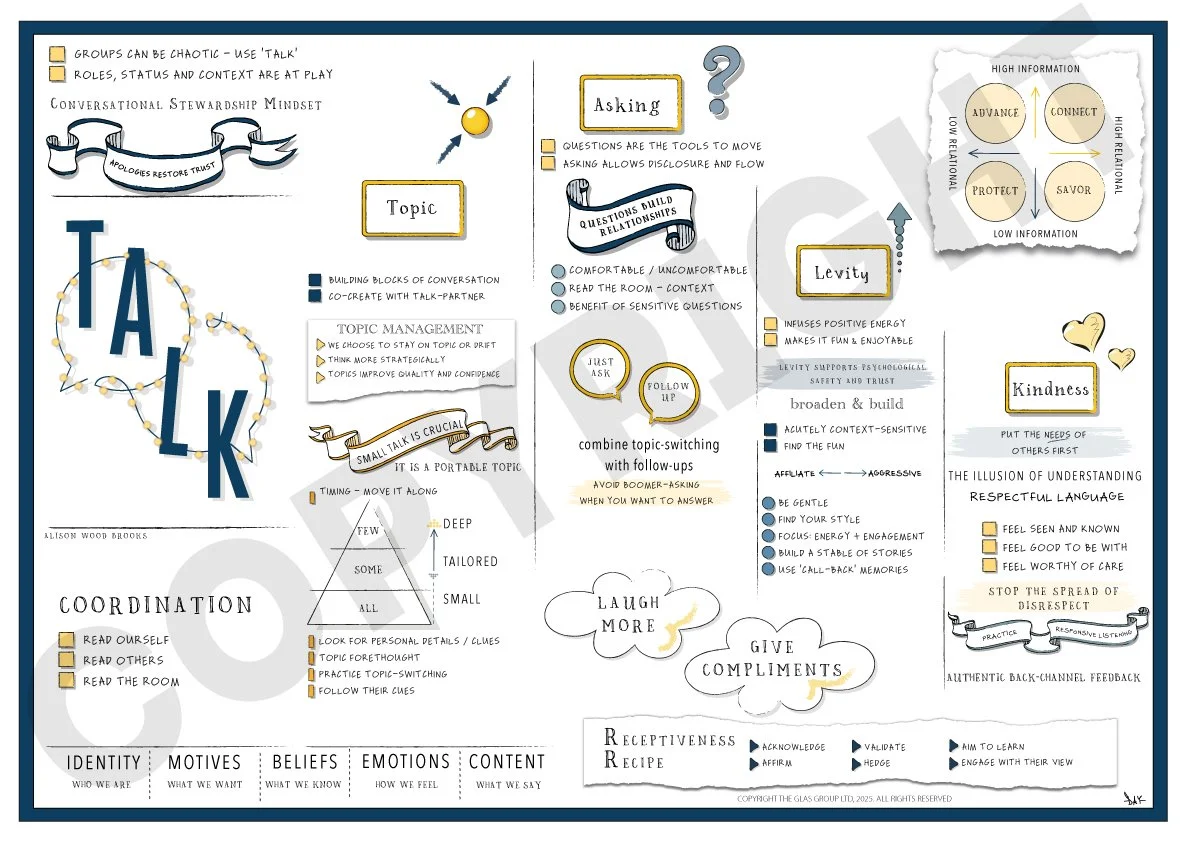
From a GLAS Method perspective, TALK strengthens Emotions / Awareness, Relationships / Connection, and Growth / Learning by helping individuals understand and regulate internal states (like anxiety or overthinking) to communicate effectively. GLAS emphasizes alignment between internal intention and external action; Brooks’ strategies equip readers to convey ideas with clarity, authenticity, and confidence, reducing misalignment caused by reactive emotions or self-doubt.
The book’s focus on relational dynamics supports Relationships / Connection, as communication is central to fostering trust, influence, and collaboration. By enhancing listening, message framing, and emotional attunement, individuals can cultivate meaningful interactions, reduce friction, and enhance shared understanding — key GLAS principles for relational alignment and energy conservation.
Finally, TALK nurtures Growth / Learning and Purpose / Meaning by showing that communication is a skill that amplifies personal and professional impact. By practicing these techniques mindfully, individuals align their behaviour with values, goals, and intent, creating coherence between what they want to achieve and how they show up. This alignment preserves energy, enhances fulfilment, and strengthens relational and professional influence, consistent with GLAS’s holistic approach to aligned living.
-
-