
 Image 1 of 1
-
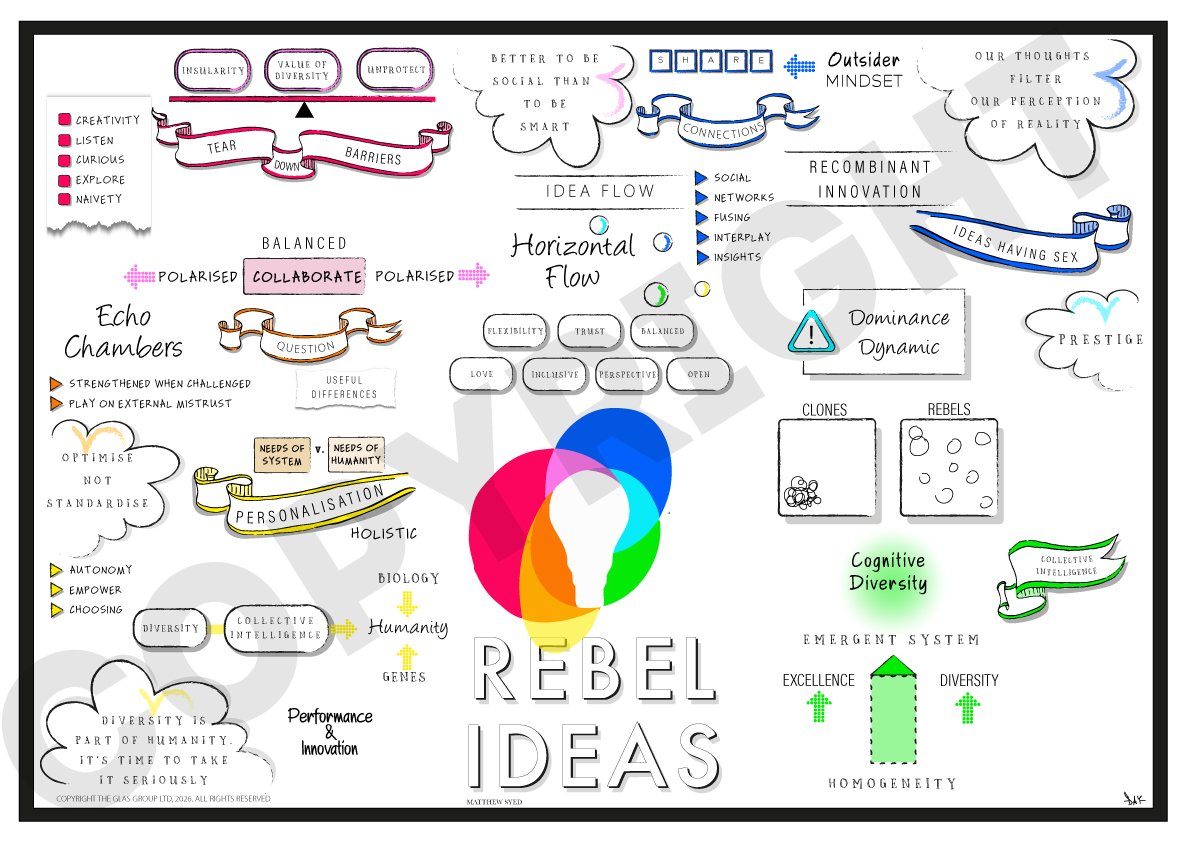
From a GLAS Method perspective, Rebel Ideas directly strengthens Growth / Learning, Relationships / Connection, and Environment / Context by showcasing how cognitive diversity expands insight, reduces blind spots, and improves decision quality. GLAS emphasises the importance of noticing hidden constraints and misalignment; incorporating diverse perspectives helps uncover assumptions that erode coherence across elements. In learning systems that privilege multiple viewpoints, teams and individuals correct course faster and make choices that are robust rather than reactive.
The book also deepens Relationships / Connection by highlighting that psychological safety — the willingness to share differing views without fear — is essential for high‑functioning collaboration. When people feel heard and respected, relational trust increases, and energy is conserved rather than wasted on conflict avoidance or defensive posturing. This aligns with GLAS’s focus on relational health as a foundation for sustained engagement and balanced collective action.
Finally, Rebel Ideas reshapes Environment / Context by showing that the conditions under which people work — norms, incentives, communication patterns — determine whether diverse thought thrives or flounders. Environments that reward curiosity, dissent, and synthesis make it easier for individuals to align intention with impact, preserving energy and strengthening purpose. In GLAS terms, designing inclusively diverse contexts supports better alignment between internal intent and external outcomes, reducing drift and enhancing collective fulfilment and performance.
-
-