
 Image 1 of 1
-
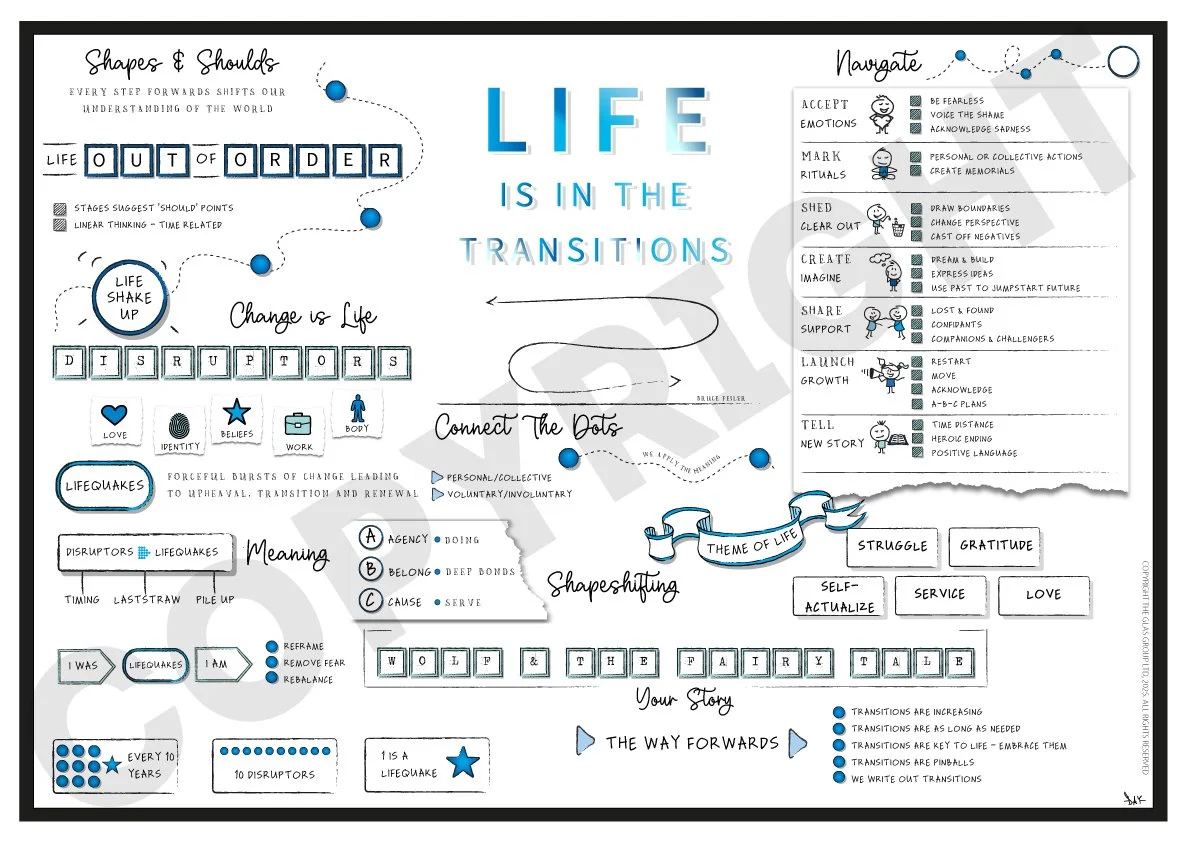
From a GLAS Method perspective, Life Is in the Transitions directly strengthens Growth / Learning, Emotions / Awareness, and Purpose / Meaning by reframing transitions as opportunities for realignment rather than disruption. GLAS emphasises tracking states of drift and misalignment before they escalate — and transitions are the natural moments when internal alignment is tested and recalibrated. Feiler’s work encourages noticing emotional shifts, cognitive reframing, and strategic adaptation, which are core to GLAS’s process of sustaining balance across elements over time.
The book’s focus on narrative reframing and meaning-making reinforces Purpose / Meaning, helping individuals see transitions not as losses or breakdowns but as thresholds of intentional change. When people approach transitions with curiosity rather than fear, they preserve energy that would otherwise be consumed by resistance or rumination, strengthening Energy / Vitality and freeing cognitive and emotional space for growth. This supports GLAS’s emphasis on coherence between internal intention and external behaviour — because aligned transitions reduce reactive drift and promote stability.
Feiler’s narratives also deepen Emotions / Awareness by modelling how people can honour their emotional responses to change — grief, hope, uncertainty — and integrate them into future planning rather than suppressing them. This emotional clarity reduces internal friction and supports sustained engagement with new paths. Transitions inherently affect relationships, roles, environments, and identity, so approaching them with presence and reflection promotes coherence across the broader GLAS elements rather than fragmentation.
-
-