
 Image 1 of 1
-
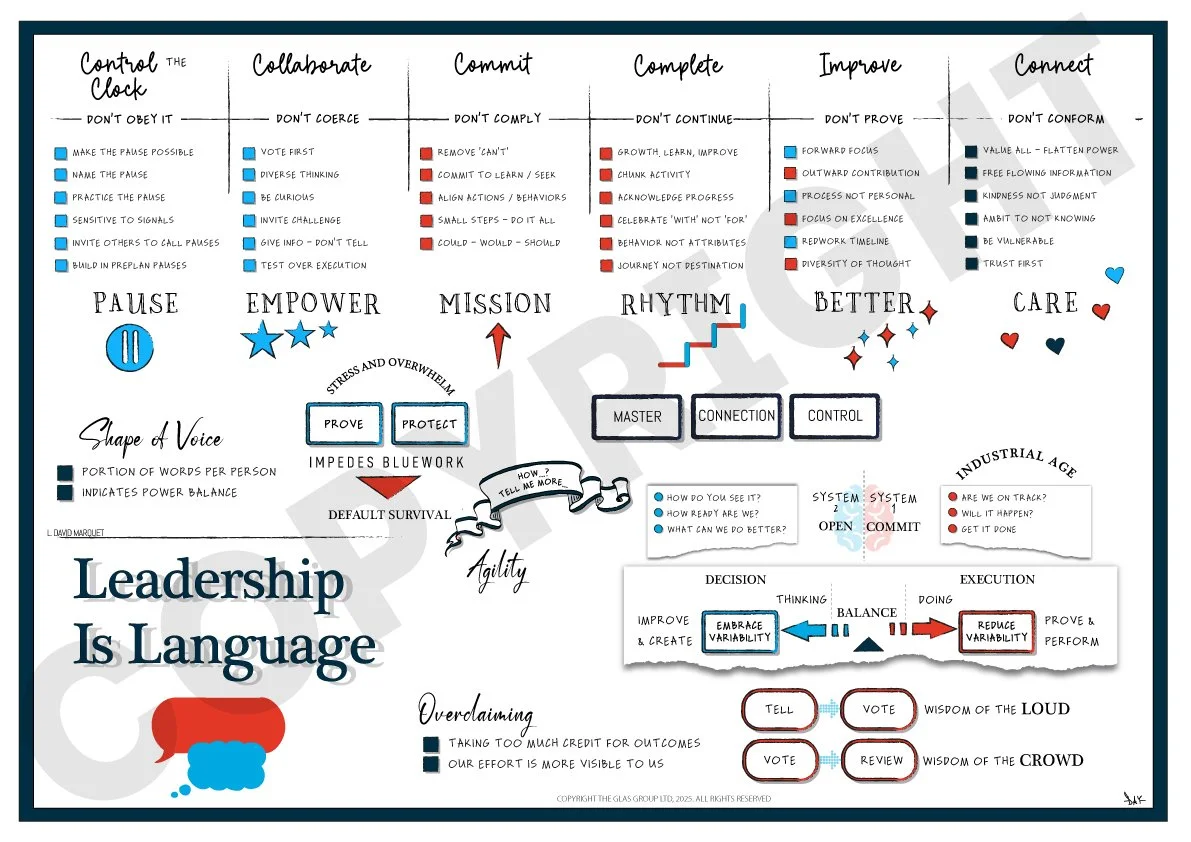
From the GLAS Method perspective, Leadership Is Language strengthens Relationships / Connection, Environment / Context, and Emotions / Awareness by showing how conversational choices shape psychological safety, shared purpose, and collaborative engagement. Language is not neutral — it scaffolds how people feel seen, heard, and empowered. When leaders adopt intent-based language, they deepen relational trust and reduce defensive, reactive interaction, aligning teams toward shared goals rather than individual compliance.
The book’s focus on language markets directly with Environment / Context: organisational culture is, in large part, enacted through recurring dialogue patterns. Recasting communication to be invitational and curiosity-driven creates contexts where people feel safe to contribute, take risks, and own outcomes. This nurtures environments that sustain balanced performance instead of triggering anxiety, scarcity thinking, or exhaustion — all forms of drift in GLAS terms.
Language also impacts Emotions / Awareness because the words leaders use shape how stakeholders interpret situations, respond to challenge, and regulate emotional responses. Intent-based language clarifies expectations, reduces ambiguity, and invites reflection — helping individuals notice their internal states and align their behaviour with shared objectives. This supports GLAS’s core goal of coherence between internal states (clarity, confidence) and external action (engaged performance).
-
-