
 Image 1 of 1
-
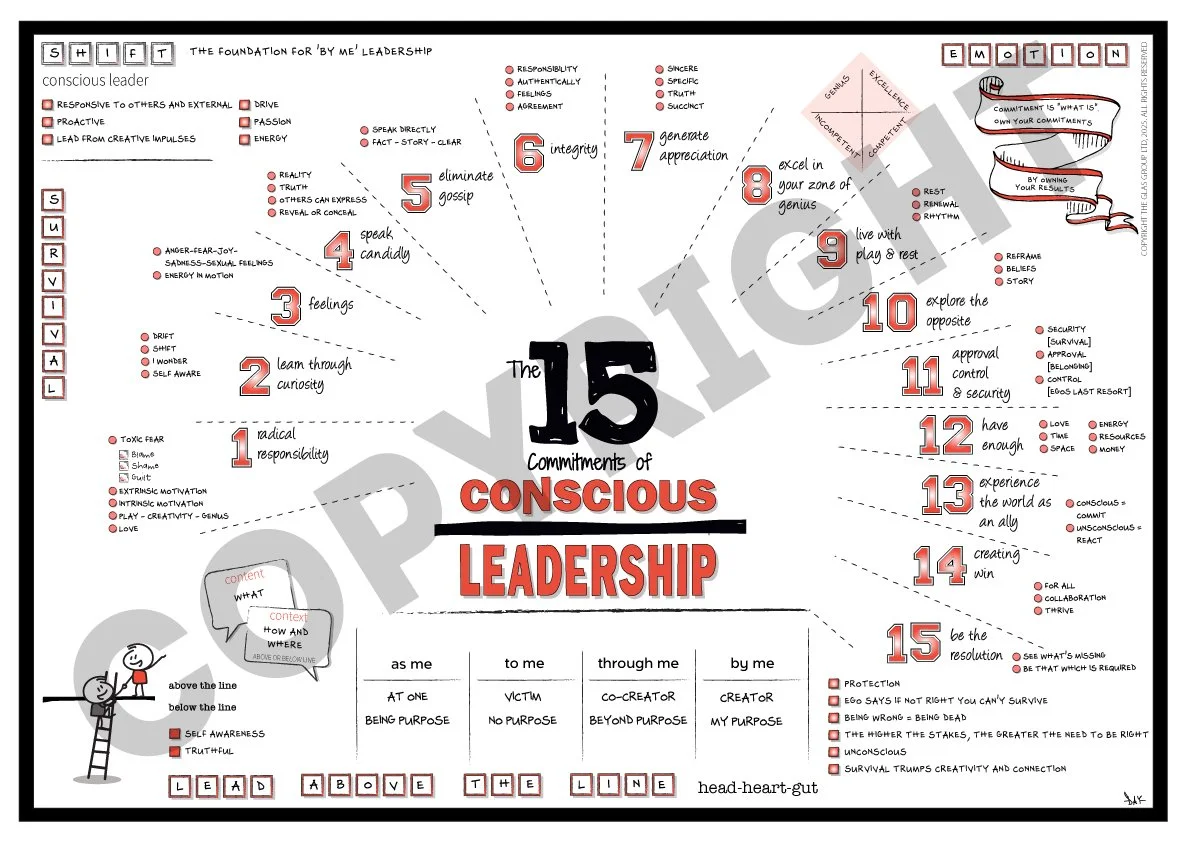
From the GLAS Method perspective, The 15 Commitments of Conscious Leadership is a powerful model for maintaining alignment across the 7 Elements by transforming how leaders relate to themselves and others. Many common drift states involve blame, defensiveness, or avoidance — all of which fracture energy, distort awareness, and weaken relationships. The 15 Commitments interrupt these drift patterns by encouraging leaders to notice internal states, take responsibility, and act intentionally rather than reactively, supporting GLAS’s emphasis on coherence between values and behaviours.
The commitments strengthen core GLAS elements such as Emotions / Awareness (through curiosity and self‑responsibility), Relationships / Connection (through authenticity and win‑for‑all thinking), and Purpose / Meaning (through clarity of intent and contribution). Leaders who practise these commitments cultivate psychological safety within their environments, which in turn preserves energy and builds trust — preventing the compensatory behaviours that emerge when people feel unsafe, overextended, or unheard.
Practically, the book functions like a LEAPS process on steroids: leaders notice when they’ve slipped into unhelpful patterns, evaluate against the 15 commitments, adapt their mindset, perform with aligned intention, and sustain new habits through reflective practices and shared language. This cyclical discipline helps maintain balance across GLAS elements over time, fostering resilient leaders who can navigate complexity without sacrificing wellbeing or connection.
-
-