
 Image 1 of 1
-
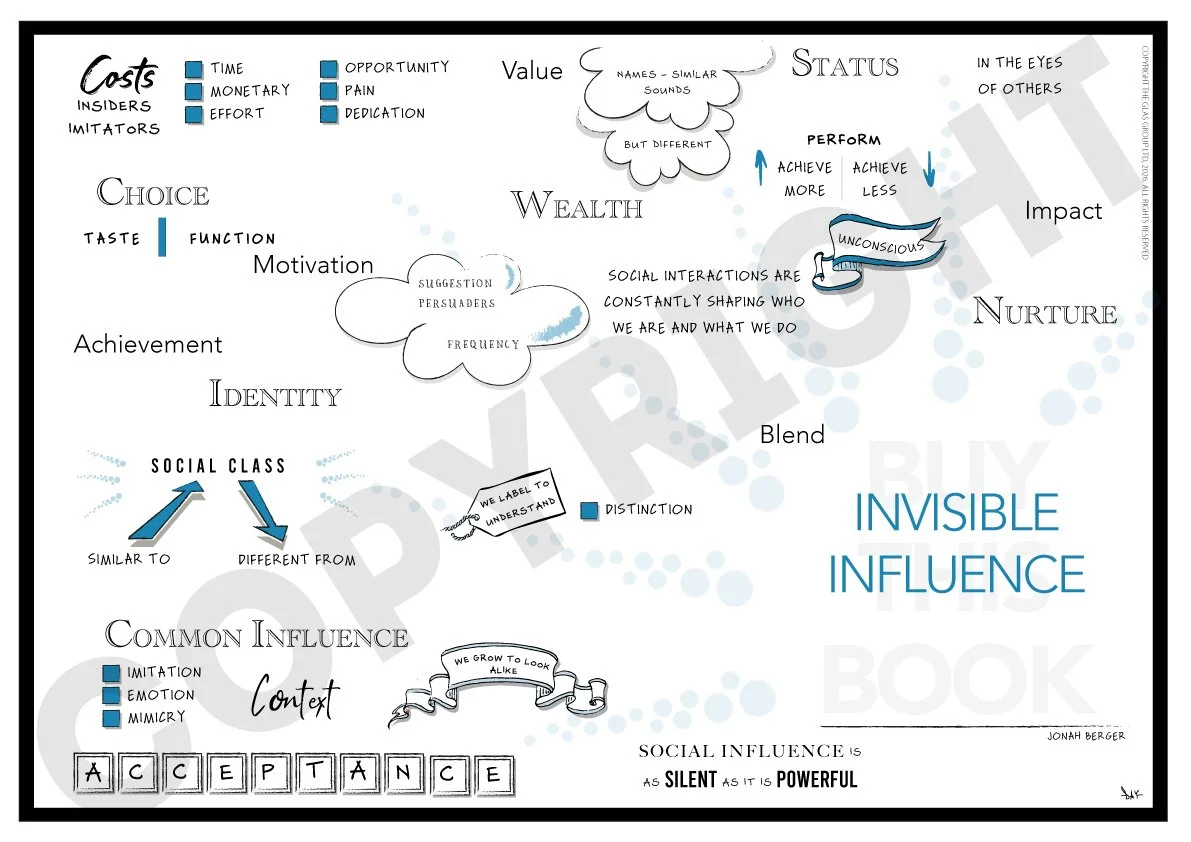
From a GLAS Method perspective, Invisible Influence deepens Emotions / Awareness and Relationships / Connection by showing that much of what drives behaviour lies below conscious awareness and in social context. Understanding invisible influence helps individuals notice subconscious patterns that may be misaligned with their deeper values or goals — a core GLAS objective of turning unconscious drift into conscious alignment. Increased awareness of social dynamics gives individuals more agency to choose behaviours that support coherence rather than reactivity.
The book also highlights how influence is embedded in relational systems, aligning closely with Relationships / Connection. Insight into how norms, signals, and social identity shape our choices helps leaders and individuals cultivate environments that support healthy influence — such as cultures of mutual respect, psychological safety, and collaborative learning — rather than environments that unconsciously drive stress, comparison, or conflict. In GLAS terms, this relational understanding enriches connection and reduces misalignment caused by hidden pressures or unexamined norms.
Additionally, Invisible Influence contributes to Environment / Context, Growth / Learning, and Purpose / Meaning by showing how context shapes behaviour and how individuals can redesign environments to support intentional action. Recognising invisible influences allows individuals and organisations to engineer contexts that reinforce aligned habits, reduce friction, and promote purposeful choices rather than defaults. This supports GLAS’s emphasis on structuring conditions that make balance and aligned action more natural and sustainable.
-
-