
 Image 1 of 1
-
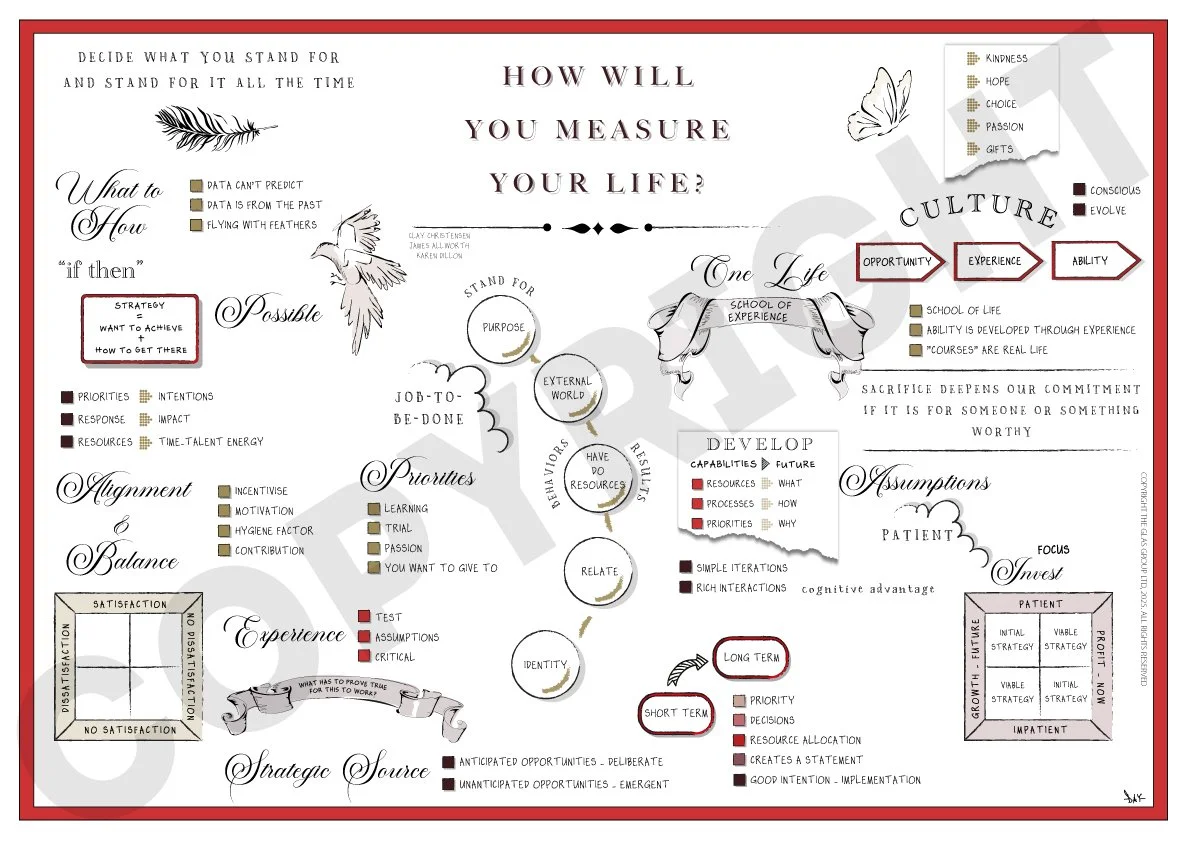
From the GLAS Method perspective, How Will You Measure Your Life? strongly reinforces Purpose / Meaning, Relationships / Connection, and Energy / Vitality by helping individuals clarify what they value most and align their lives accordingly. The book’s core message — that meaningful lives are created through deliberate choices rather than blind momentum — mirrors GLAS’s emphasis on coherence between internal intention and everyday behaviour. By asking deep reflective questions about sacrifice, commitment, and prioritisation, readers gain clarity that strengthens aligned action.
The book’s focus on investing time and attention in significant relationships underscores the GLAS element of Relationships / Connection. Christensen highlights that relational wellbeing — with family, friends, and community — is not incidental but the product of consistent presence, intention, and resource allocation. This relational intentionality prevents drift caused by over-prioritising professional achievement at the expense of connection, preserving emotional energy and psychological safety across life domains.
Additionally, the framework of allocating limited resources — especially time and energy — supports Energy / Vitality by encouraging individuals to avoid the subtle drains of marginal thinking and instead concentrate effort where it yields deep meaning and fulfilment. This alignment across elements strengthens resilience, reduces internal conflict, and fosters a sense of wellbeing grounded in values, connection, and intentional living — all core aspirations of the GLAS model.
-
-