
 Image 1 of 1
-
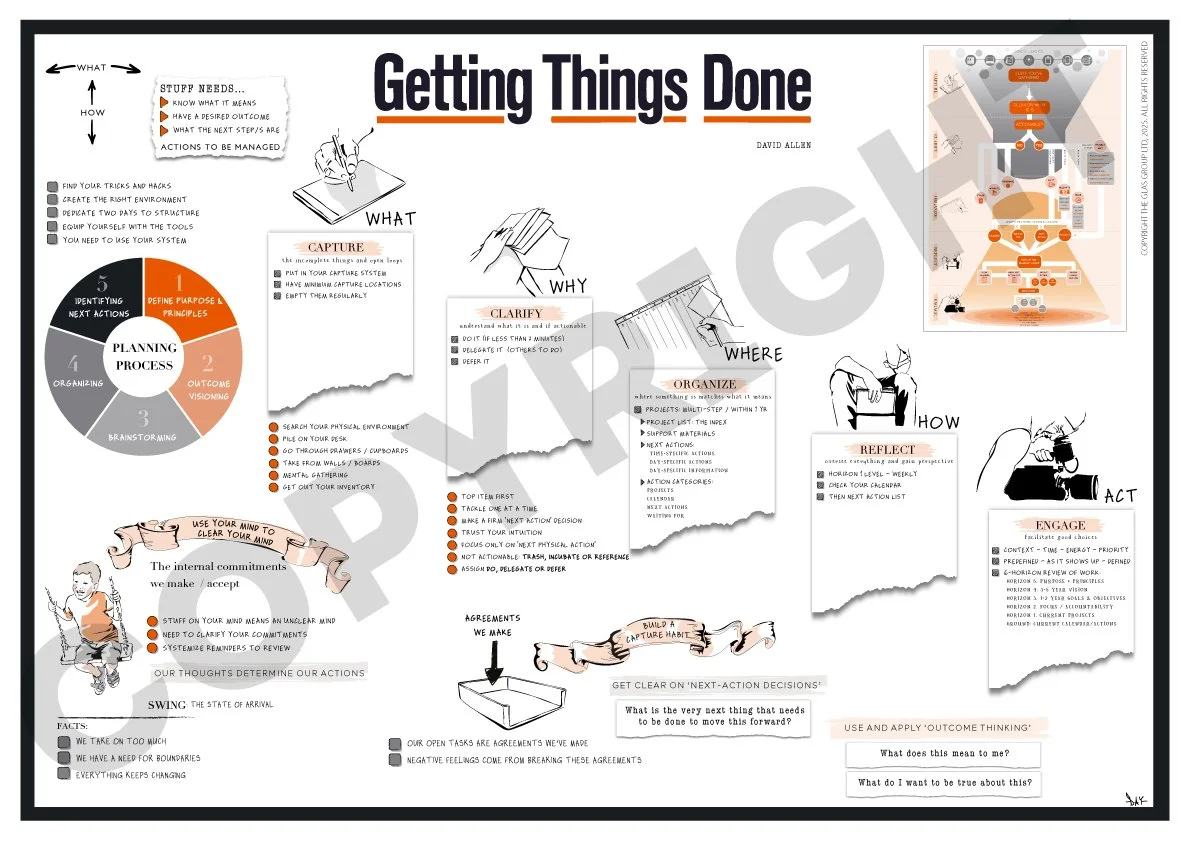
From a GLAS Method perspective, Getting Things Done primarily strengthens Environment / Context, Energy / Vitality, and Growth / Learning by providing a structured system that prevents drift into reactive busyness and mental clutter. When commitments, ideas, and obligations float around unprocessed in the mind, they drain energy and fragment attention — classic misalignment across the GLAS elements. GTD resolves this by designing an external context that reduces internal noise and preserves mental bandwidth for focused, intentional action.
The method’s emphasis on regular reflection (review) supports Purpose / Meaning and Emotions / Awareness by creating intentional space to evaluate whether current actions align with core values and goals. Weekly reviews help individuals notice patterns of overcommitment, renegotiate priorities, and reconnect with what genuinely matters before defaulting into distraction or urgency. This reflective discipline aligns internal intention with external behaviour — reducing reactive patterns that undermine coherence and calm.
Practically, GTD functions like a systemised LEAPS cycle: capture (notice), clarify and organise (evaluate/adapt), reflect (perform with clarity), and review (sustain). The trusted system helps individuals engage with their work and life commitments with confidence, reducing stress and preserving cognitive and emotional energy. In GLAS terms, GTD doesn’t just enhance performance; it creates the environmental and cognitive conditions that make sustained balance across elements possible.
-
-