Feel The Fear And Do It Anyway (Susan Jeffers)

£4.00

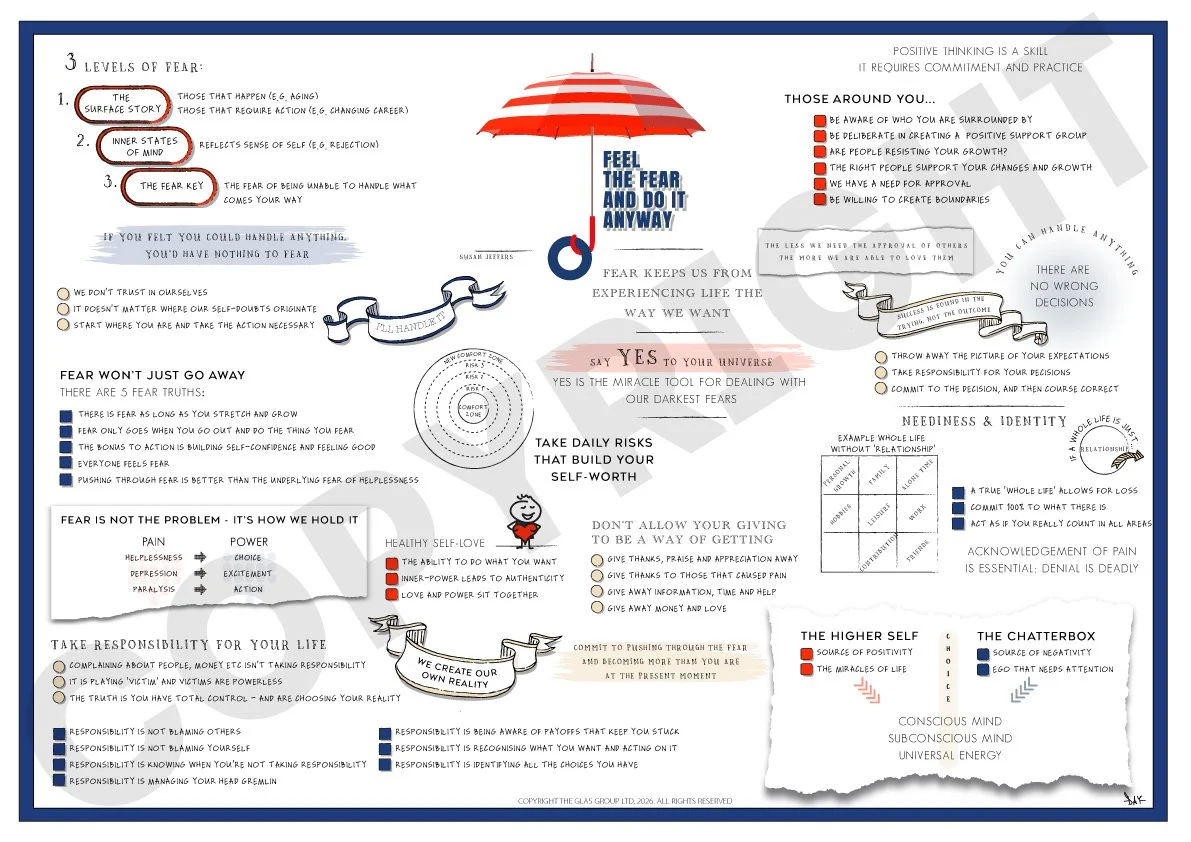
Feel the Fear and Do It Anyway by Susan Jeffers explores how fear is a natural part of life and growth, and how we can transform our relationship with fear rather than be controlled by it. Jeffers argues that the discomfort of fear often indicates opportunities for learning and expansion, and that by shifting our mindset — from “I can’t handle this” to “I can handle this” — we gain confidence, courage, and resilience. The book offers practical tools and exercises to overcome self-doubt, take purposeful action despite anxiety, and build trust in our ability to face challenges and live more empowered lives.

Feel the Fear and Do It Anyway by Susan Jeffers explores how fear is a natural part of life and growth, and how we can transform our relationship with fear rather than be controlled by it. Jeffers argues that the discomfort of fear often indicates opportunities for learning and expansion, and that by shifting our mindset — from “I can’t handle this” to “I can handle this” — we gain confidence, courage, and resilience. The book offers practical tools and exercises to overcome self-doubt, take purposeful action despite anxiety, and build trust in our ability to face challenges and live more empowered lives.

  • Feel the Fear and Do It Anyway by Susan Jeffers explores how fear is not something to eliminate, but something to move with. Jeffers argues that fear accompanies growth, change, and meaningful decisions — and that confidence is built through action, not before it. By shifting internal dialogue and choosing forward movement despite discomfort, individuals expand capacity and self-trust.

    From a GLAS perspective, fear is often a signal of misalignment between identity and intention. When purpose is unclear, fear amplifies uncertainty. But when values and direction are defined, fear becomes data rather than danger. The GLAS method would frame fear as information — asking: What matters here? What am I protecting? What future self am I stepping toward? Structured reflection reduces emotional noise and restores grounded choice.

    Ultimately, the book reinforces a core GLAS principle: sustainable growth requires internal alignment under pressure. Fear will appear at every threshold of expansion — leadership, visibility, responsibility, change. The question is not how to remove it, but how to stand steady within it. Clarity of identity, deliberate action, and self-trust turn fear from a blocker into a bridge.