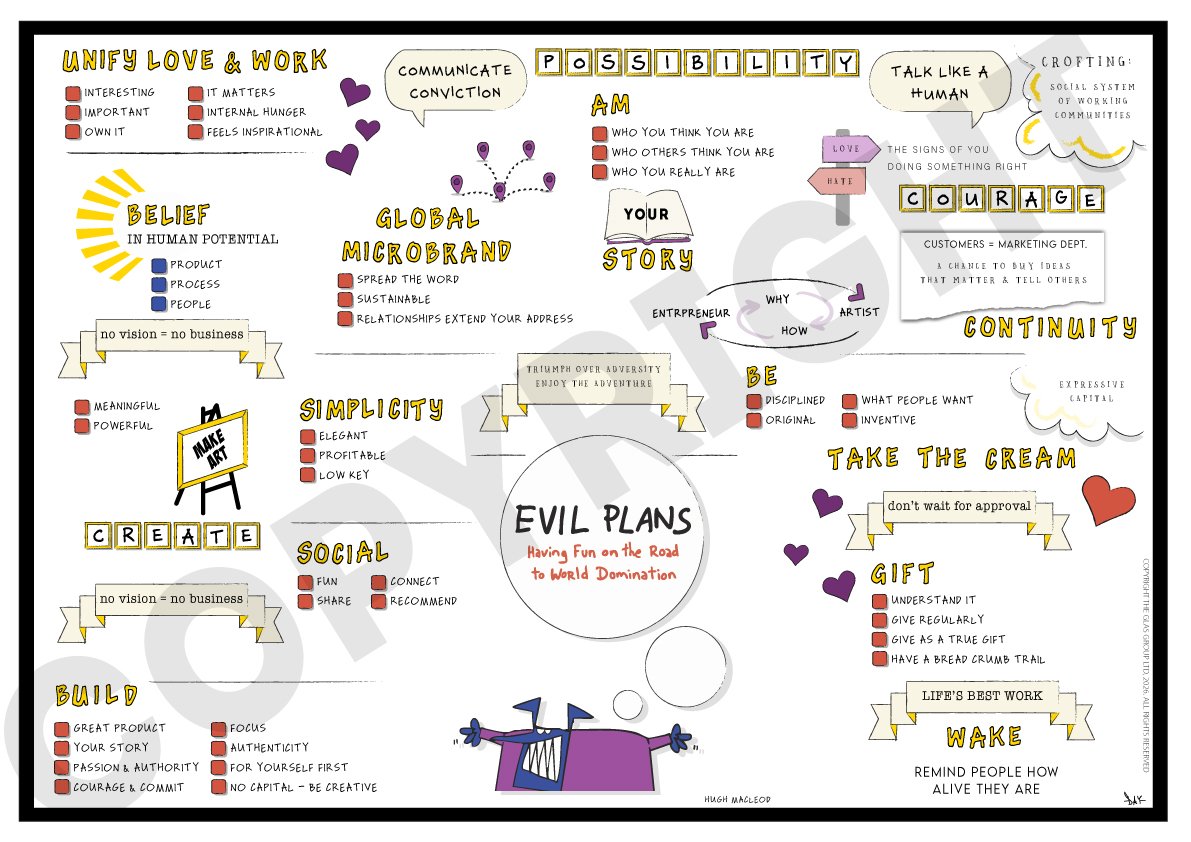
Evil Plans (Hugh MacLeod)

£4.00

Evil Plans by Hugh MacLeod explores how individuals can turn their ideas into something meaningful by committing to bold, unconventional thinking. MacLeod argues that impactful work rarely emerges from playing safe or following the crowd. Instead, it requires clarity of intent, resilience in the face of resistance, and the courage to develop ideas that may initially seem unrealistic or disruptive.

Blending sharp insight with irreverent humour, he challenges readers to embrace creative risk, build an audience through authenticity, and focus on work that truly matters. The book reframes “evil” not as negative, but as daring enough to stand apart, encouraging readers to back their own vision and execute it with persistence and conviction.

Evil Plans by Hugh MacLeod explores how individuals can turn their ideas into something meaningful by committing to bold, unconventional thinking. MacLeod argues that impactful work rarely emerges from playing safe or following the crowd. Instead, it requires clarity of intent, resilience in the face of resistance, and the courage to develop ideas that may initially seem unrealistic or disruptive.

Blending sharp insight with irreverent humour, he challenges readers to embrace creative risk, build an audience through authenticity, and focus on work that truly matters. The book reframes “evil” not as negative, but as daring enough to stand apart, encouraging readers to back their own vision and execute it with persistence and conviction.

  • From the GLAS Method perspective, Evil Plans strengthens Identity, Purpose, and Leading by urging individuals to stop seeking permission and start backing their own ideas. It challenges conventional drift and calls people into self-authorship, asking what is truly worth building rather than what feels safe to pursue.

    The book reinforces Purpose by framing bold, unconventional thinking as contribution, not ego. Within GLAS, this reflects balanced expression, where creative energy is directed with clarity and intent rather than scattered for approval.

    Finally, it supports Leading as responsibility for ideas. Leadership becomes sustained conviction, the willingness to develop and stand behind a vision despite resistance, translating insight into consistent, aligned action.