
 Image 1 of 1
-
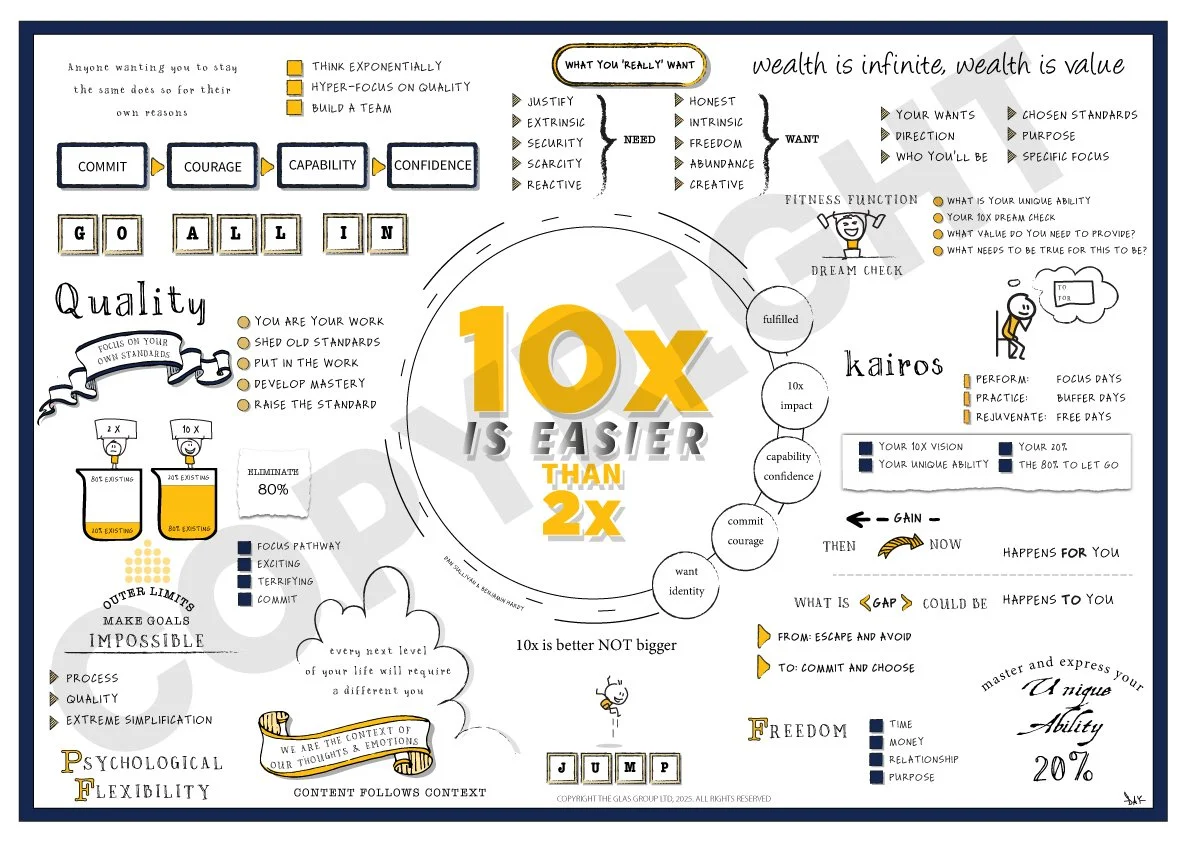
From a GLAS Method perspective, 10x Is Easier Than 2x addresses the misalignment that occurs when leaders settle for incremental progress because it keeps them within old behavioural systems that drain Energy / Vitality, limit Growth / Learning, and compress Purpose / Meaning. By shifting to a 10x frame, leaders force a recalibration of mental models — connecting intention with action at a level that aligns more cleanly with identity and long‑term ambition rather than short‑term comfort. This shift supports GLAS’s emphasis on coherence between internal state and external action.
The book’s insistence on strategic elimination directly impacts Balance across multiple elements. Removing low‑leverage tasks preserves energy and opens mental bandwidth for deeper learning and creative thinking. This reduction of noise benefits Emotions / Awareness, helping leaders avoid drift states driven by overcommitment and diffuse priorities. It also benefits Relationships / Connection, because attention is freed to nurture fewer but more meaningful engagements rather than spreading oneself thin across too many demands.
Practically, the approach functions like a macro‑LEAPS cycle: leaders notice where incremental thinking keeps them stuck, evaluate opportunities for exponential impact, adapt identity and systems, perform with a new focus, and sustain outcomes by designing environments that reinforce 10x habits. In GLAS terms, this supports not only individual performance but organisational culture, because exponential thinking cascades through shared purpose, resource allocation, and collective clarity.
-
-