
 Image 1 of 1
-
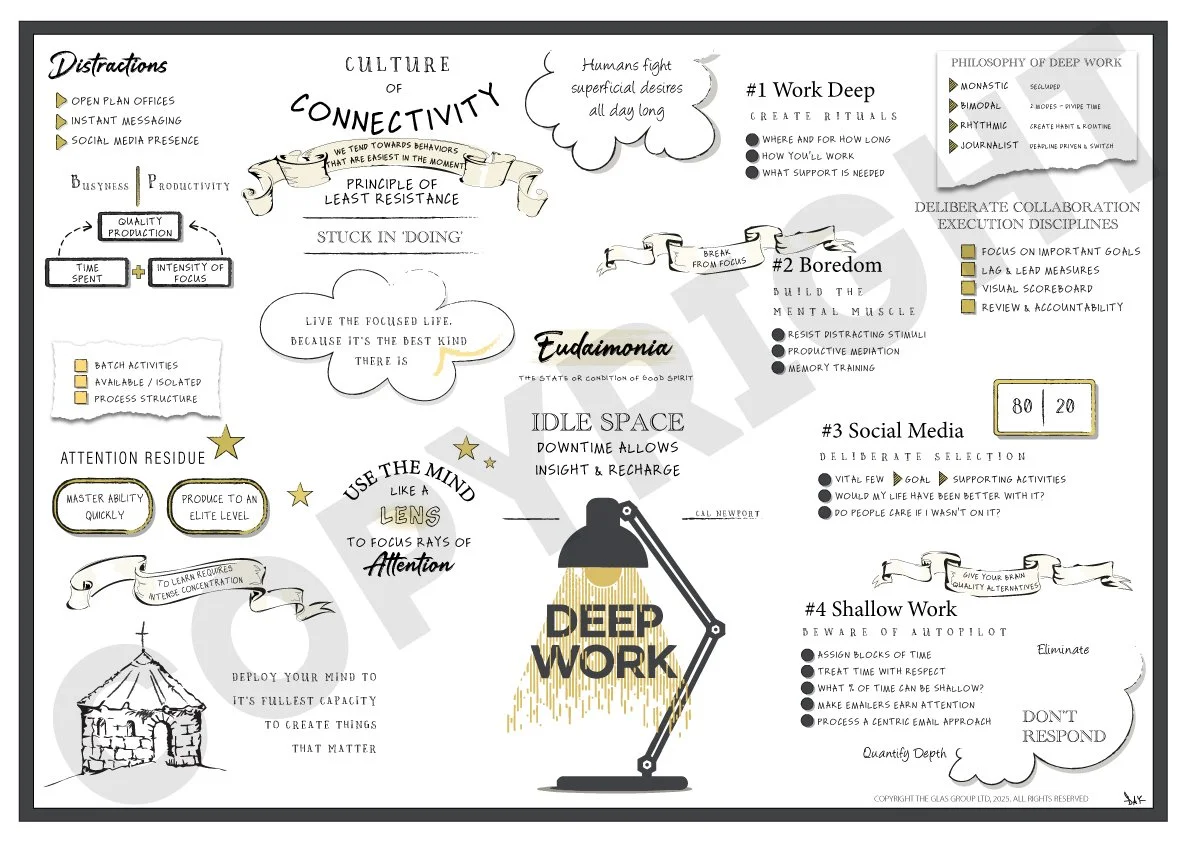
From the GLAS Method perspective, Deep Work directly enhances Environment / Context, Energy / Vitality, and Growth / Learning by helping individuals structure their work and attention in ways that preserve cognitive bandwidth and reduce fragmentation. In GLAS terms, distraction is a form of drift — a pull away from purposeful engagement toward reactive busyness — and deep work practices re‑anchor focus on high‑leverage activities that align with intention and impact.
By carving out protected time and establishing routines that prioritise sustained focus, individuals strengthen Energy / Vitality, because less cognitive switching reduces stress, fatigue, and wasted effort. A well‑designed context that limits interruption helps energy flow into meaningful tasks rather than being scattered across shallow demands. This capacity for focus also directly supports Growth / Learning, as mastery of complex skills and deep creative work requires time for deliberate practice and uninterrupted thinking.
Deep Work also reinforces Purpose / Meaning, because clarity of intention about what truly matters helps individuals decide which tasks deserve deep attention and which should be minimised. When attention is aligned with core goals and values, people experience greater fulfilment and less reactive drift. In GLAS language, deep work practices help individuals notice where attention is being pulled, evaluate what matters most, adapt their habits, perform with intention, and sustain high‑impact focus over time — effectively functioning as a structural LEAPS cycle for cognitive alignment.
-
-