
 Image 1 of 1
-
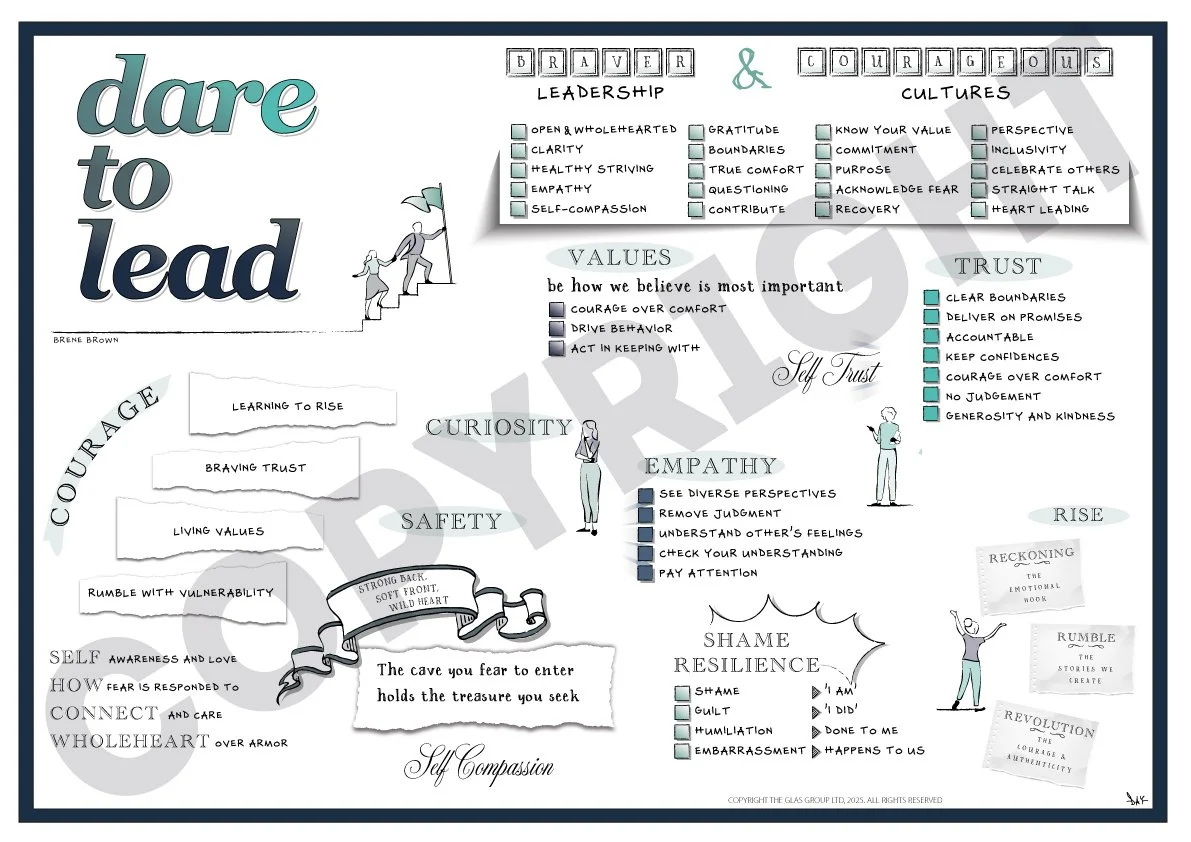
From the GLAS Method perspective, Dare to Lead intersects deeply with Emotions / Awareness, Relationships / Connection, and Environment / Context, because it foregrounds emotional courage and vulnerability as prerequisites for aligned leadership and sustainable organisational performance. Brown’s call to embrace self‑awareness parallels GLAS’s emphasis on noticing internal states before acting — crucial for avoiding reactive or defensive behaviours that erode trust and coherence across elements. When leaders are grounded in self‑reflection, they can navigate uncertainty without amplifying drift.
The book also strengthens Relationships / Connection by equipping leaders with tools and practices that build trust, psychological safety, and authentic engagement. These relational capacities reduce friction, enhance communication, and strengthen the social fabric of teams — all key to maintaining balance across purpose and energy. In GLAS terms, connection is not optional; it is a central element that sustains collective alignment and fosters cultures where people feel seen, supported, and motivated to contribute.
Furthermore, Dare to Lead reshapes Environment / Context by advocating for cultures that reward courage, curiosity, and honest feedback. This context enables individuals and teams to operate with clarity of purpose and a shared commitment to growth. By reinforcing psychological safety and mutual accountability, Brown’s model helps prevent drift caused by fear, avoidance, or silos — ensuring that organisational systems support rather than undermine energy, clarity, and collective wellbeing.
-
-