
 Image 1 of 1
-
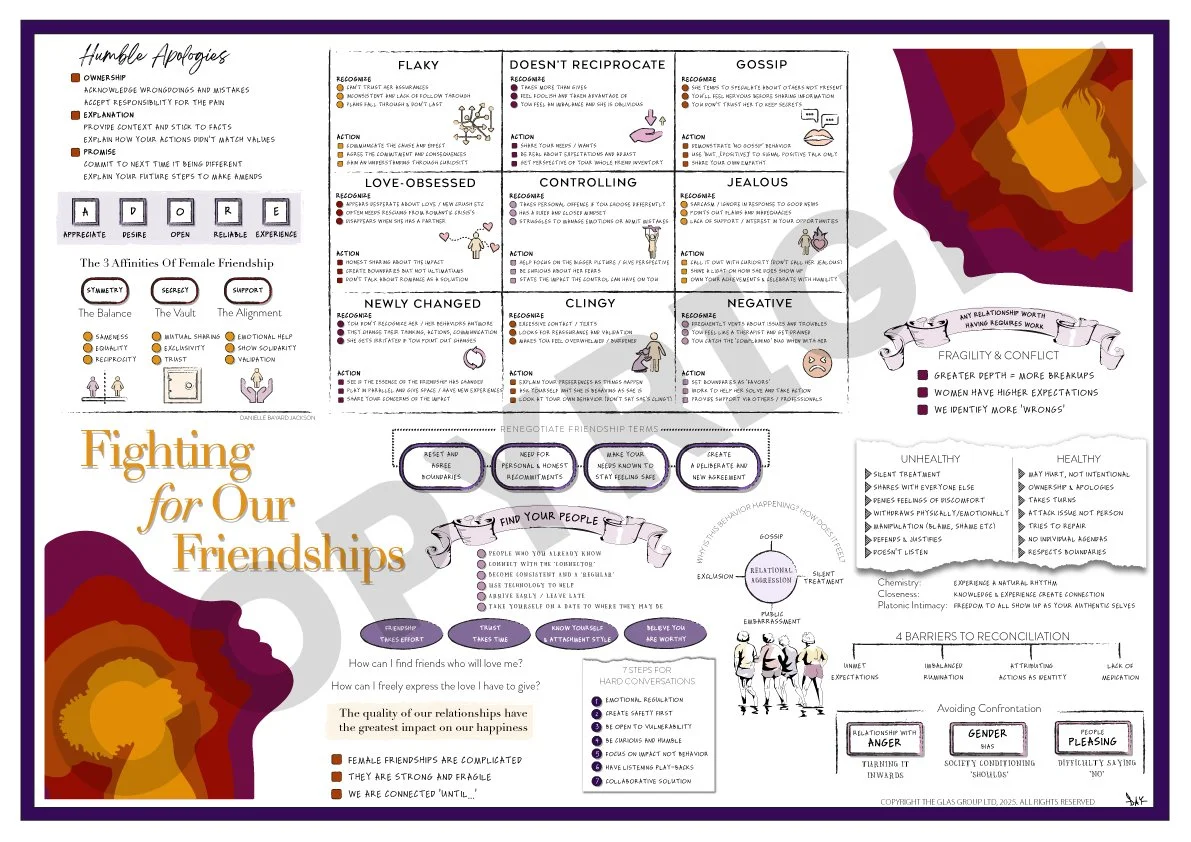
From the GLAS Method perspective, Fighting for Our Friendships deeply supports the element of Relationships / Connection — the social core that sustains wellbeing, collaboration, and mutual support across life domains. The book highlights how misunderstandings, avoidance, and unspoken assumptions lead to relational drift, fracturing connection and consuming emotional energy. By offering tools for courageous, clear communication and conflict navigation, Jackson strengthens relational coherence, helping friendships stay aligned with shared values rather than deteriorating through neglect.
This work also reinforces Emotions / Awareness, because it encourages readers to recognise and articulate their feelings — including hurt, fear, and longing — rather than suppressing them. Emotional clarity supports healthy relational repair and prevents reactive behaviour that undermines trust. In GLAS terms, awareness of internal states and emotional triggers allows individuals to approach conflict with presence and intention rather than defensiveness or avoidance, leading to stronger, more resilient bonds.
Additionally, Fighting for Our Friendships touches on Energy / Vitality and Joy / Fulfilment, because healthy friendships replenish emotional reserves and contribute to life satisfaction. By advocating for boundaries, reciprocity, and intentional quality time, the book helps individuals preserve energy for meaningful engagement rather than draining effort on unfulfilling or misaligned interactions. This supports GLAS’s broader mission of maintaining alignment not only within the self but in how individuals engage socially and contribute to others’ lives.
-
-