
 Image 1 of 1
-
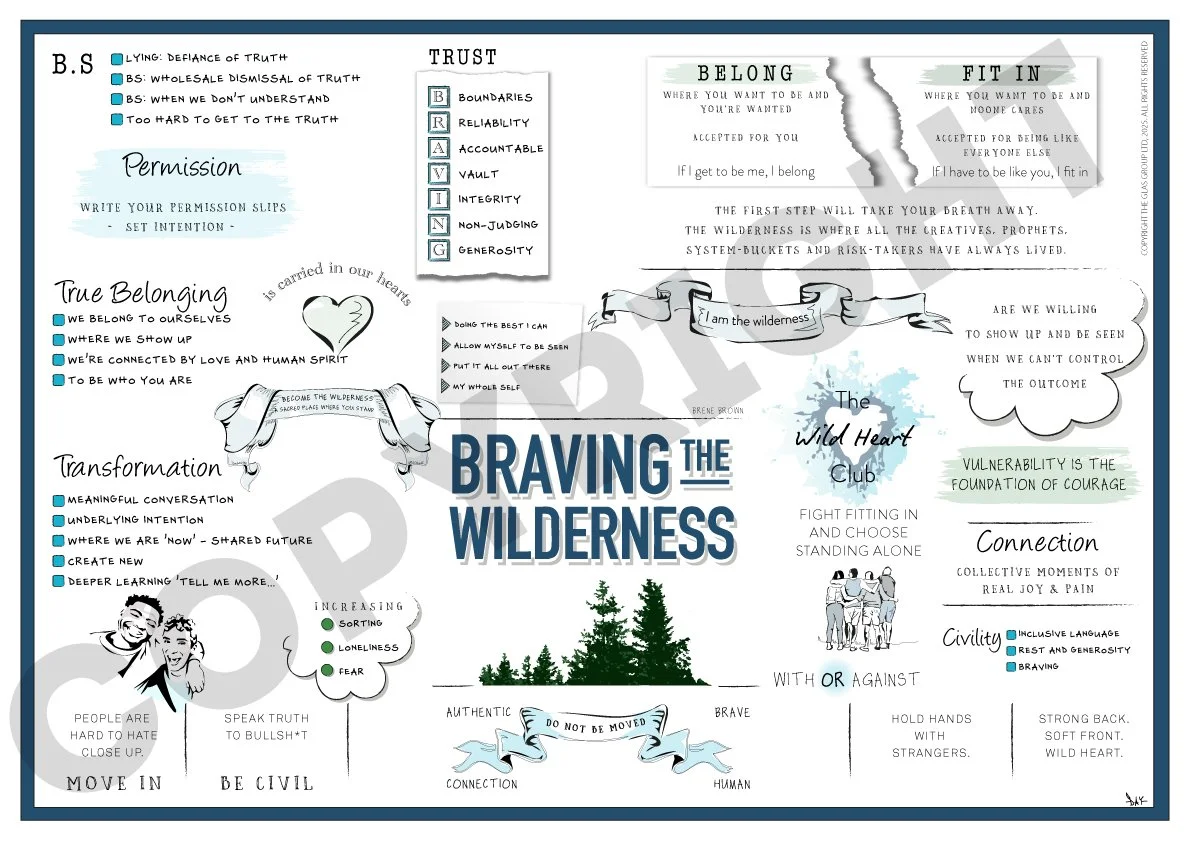
From the GLAS Method perspective, Braving the Wilderness most directly invigorates Emotions / Awareness, Relationships / Connection, and Purpose / Meaning by encouraging individuals to develop inner clarity about who they are and how they want to show up in the world. Brown’s emphasis on authenticity — “owning” one’s story and values — aligns with GLAS’s focus on internal coherence as the basis for aligned action. When individuals know themselves deeply and act in integrity, they reduce internal conflict and strengthen connection with others.
The book’s concept of courageous belonging strengthens Relationships / Connection by promoting genuine engagement over performative or surface‑level social harmony. In GLAS terms, this shifts relational interaction from compensatory avoidance (seeking approval or safety) toward meaningful, respectful connection, which supports psychological safety, trust, and mutual understanding. This relational alignment also fuels purpose, energy, and joy, as individuals feel more grounded and supported in their life and work contexts.
Brown’s work also reinforces Purpose / Meaning by asserting that belonging to oneself is a prerequisite for purposeful engagement with others and the world. This clarity of identity and values becomes a compass for decision‑making, helping individuals act consistently with long‑term vision rather than reacting to social pressure or fear of exclusion. In GLAS language, mastering the internal landscapes of worth and belonging preserves energy, supports emotional resilience, and strengthens relational coherence — all of which underpin a balanced, meaningful life.
-
-