
 Image 1 of 1
-
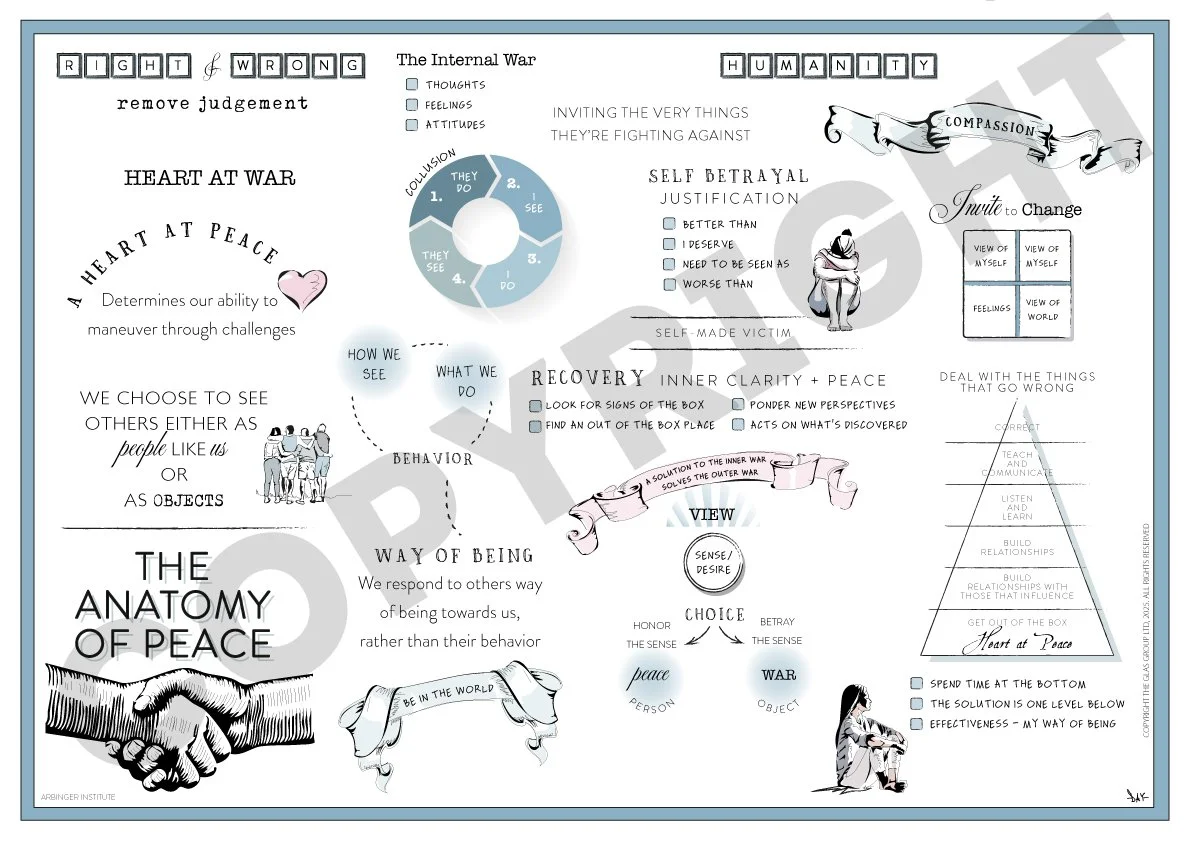
Viewed through the GLAS Method, The Anatomy of Peace aligns closely with the elements of Emotions / Awareness and Relationships / Connection by exposing how self‑justifying mindsets create drift and imbalance across the system. Being “in the box” maps to a loss of emotional awareness and relational connection, where leaders prioritise self‑focus over mutual understanding, leading to depleted energy, mistrust, and fragmented purpose. The book’s focus on shifting mindset restores coherence between internal perception and outward behaviour — a core GLAS principle.
The outward mindset that Arbinger advocates revitalises Energy / Vitality and Joy / Fulfilment by replacing conflict‑driven stress with clarity, empathy, and intentional engagement. When leaders see others as collaborators rather than competitors, they reduce friction, improve communication, and create an environment where people feel seen and valued. This aligns with GLAS’s emphasis on shaping context and conditions that sustain balance rather than amplifying drift through defensiveness and misalignment.
Practically, The Anatomy of Peace can be seen as a relationship‑focused LEAPS cycle: leaders notice when they’re in self‑justifying patterns, evaluate the impact of those patterns, adapt by adopting an outward mindset, perform with empathy and accountability, and sustain peace by continually reinforcing the new relational frame. This cycle strengthens alignment not only in relationships but across elements such as purpose, energy, and emotional awareness.
-
-