
 Image 1 of 1
-
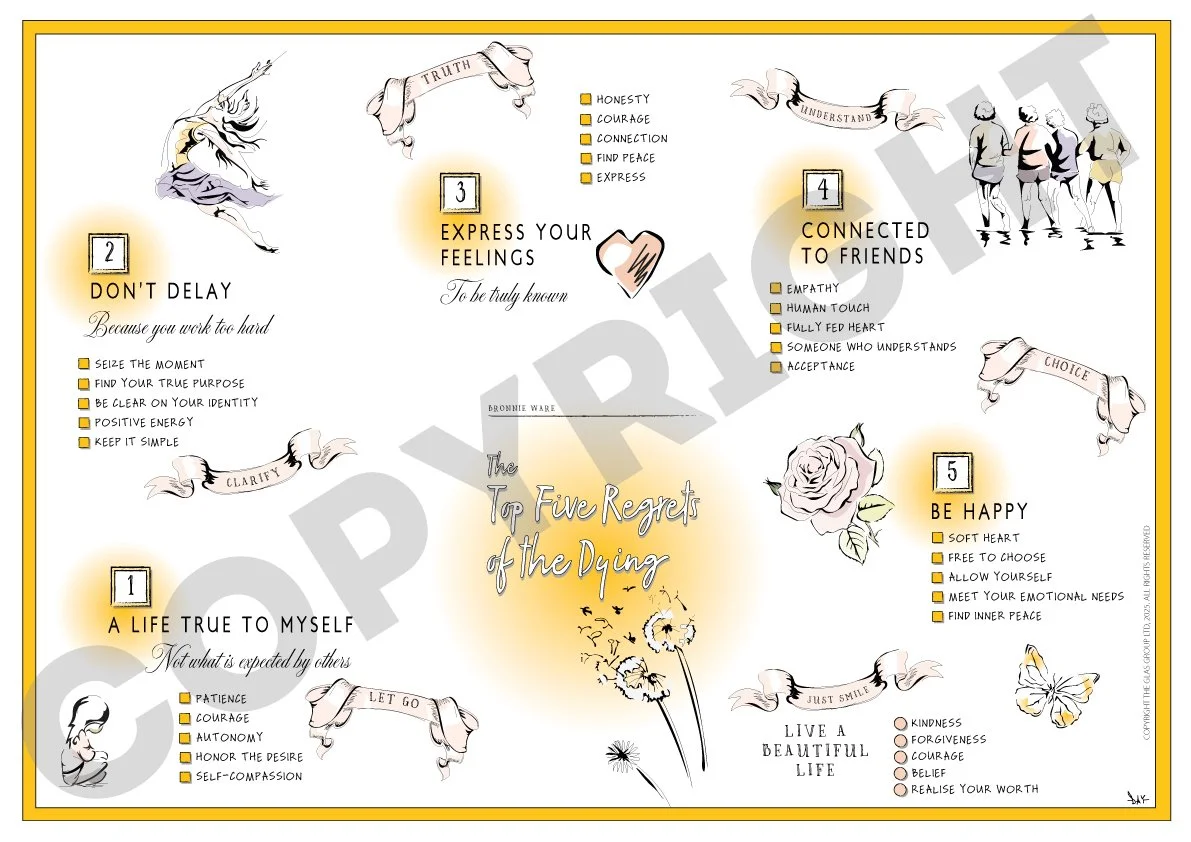
Viewed through the GLAS Method, The Top Five Regrets of the Dying is a stark illustration of what happens when life is lived out of balance and misalignment for too long. Each of the regrets reflects one or more of the 7 Elements being consistently deprioritised — authenticity sacrificed for security, relationships traded for work, emotional awareness suppressed, and joy postponed. From a GLAS perspective, these regrets are not moral failings, but signals of prolonged imbalance where external demands override internal truth.
The book powerfully mirrors the GLAS concept of drifting away from alignment over time. People do not wake up at the end of life suddenly misaligned; they arrive there through repeated micro-compromises that feel practical in the moment but slowly erode balance across the system. In GLAS terms, energy is drained, values are muted, and relationships become transactional, pushing individuals into a compensatory state that feels functional but is ultimately unsustainable.
GLAS reframes these regrets as preventable when alignment is actively maintained through awareness and deliberate recalibration. Using tools like LEAPS, individuals can notice early signs of imbalance, realign the affected elements, and make course corrections long before regret accumulates. In this way, Ware’s work reinforces the central GLAS premise: a well-lived life is not defined by achievement alone, but by sustained balance, honest alignment, and the courage to live in accordance with what matters while there is still time.
-
-