 Image 1 of 1
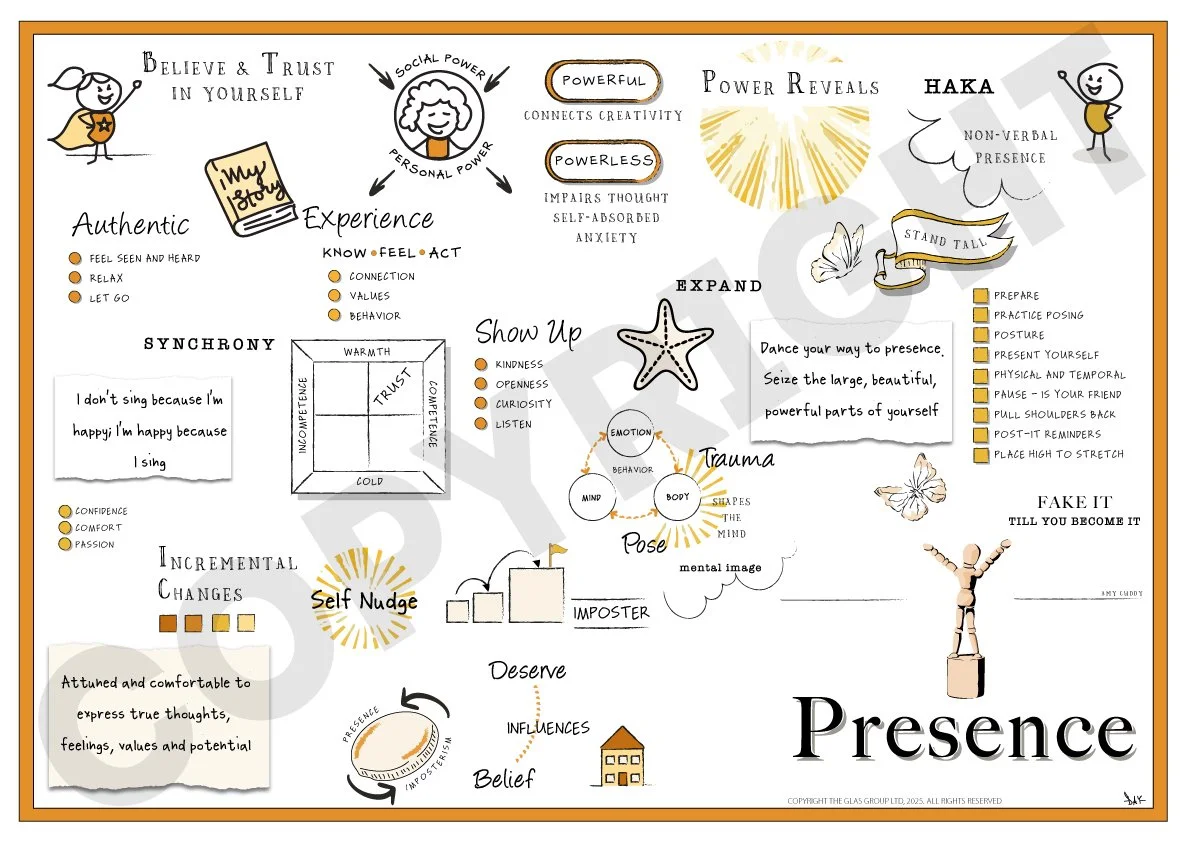
In Presence, Amy Cuddy explores what it means to show up fully and authentically, especially in moments that feel exposing, high-stakes, or uncertain. Rather than framing confidence as bravado or certainty, Cuddy defines it as self-trust, the ability to be yourself without self-betrayal.
Through the GLAS lens, Presence begins at identity. It challenges the belief that confidence must be earned through performance, status, or approval, and instead restores the belief that being yourself is already enough. When identity is grounded, people feel more able to take up space without armour.
The book also strongly aligns with relating. Cuddy shows that presence deepens connection, not by impressing others, but by being emotionally available, honest, and human. When we are present with ourselves, we relate with less defensiveness and more clarity.
At a motivation level, Presence highlights the difference between fear-driven effort and values-led action. When people act from self-acceptance rather than self-doubt, energy becomes steadier and more sustainable. Courage comes not from eliminating fear, but from staying connected to yourself while moving forward.
From a GLAS perspective, Presence reinforces a core truth: confidence is not about becoming someone more impressive. It is about removing the internal blocks that stop you from being who you already are. When identity, relating, and motivation are aligned, presence follows naturally, and impact becomes a by-product rather than a performance.
Presence complements the GLAS self-acceptance theme by reminding us that growth does not require self-correction.
It requires self-trust, permission, and alignment.
The download file you will receive does not have a watermark.
Click here to buy the book today at Amazon (.co.uk)
Click here to buy the book today at Amazon (.com)
Click here to find out more about the author
In Presence, Amy Cuddy explores what it means to show up fully and authentically, especially in moments that feel exposing, high-stakes, or uncertain. Rather than framing confidence as bravado or certainty, Cuddy defines it as self-trust, the ability to be yourself without self-betrayal.
Through the GLAS lens, Presence begins at identity. It challenges the belief that confidence must be earned through performance, status, or approval, and instead restores the belief that being yourself is already enough. When identity is grounded, people feel more able to take up space without armour.
The book also strongly aligns with relating. Cuddy shows that presence deepens connection, not by impressing others, but by being emotionally available, honest, and human. When we are present with ourselves, we relate with less defensiveness and more clarity.
At a motivation level, Presence highlights the difference between fear-driven effort and values-led action. When people act from self-acceptance rather than self-doubt, energy becomes steadier and more sustainable. Courage comes not from eliminating fear, but from staying connected to yourself while moving forward.
From a GLAS perspective, Presence reinforces a core truth: confidence is not about becoming someone more impressive. It is about removing the internal blocks that stop you from being who you already are. When identity, relating, and motivation are aligned, presence follows naturally, and impact becomes a by-product rather than a performance.
Presence complements the GLAS self-acceptance theme by reminding us that growth does not require self-correction.
It requires self-trust, permission, and alignment.
The download file you will receive does not have a watermark.
Click here to buy the book today at Amazon (.co.uk)
Click here to buy the book today at Amazon (.com)
Click here to find out more about the author