
 Image 1 of 1
-
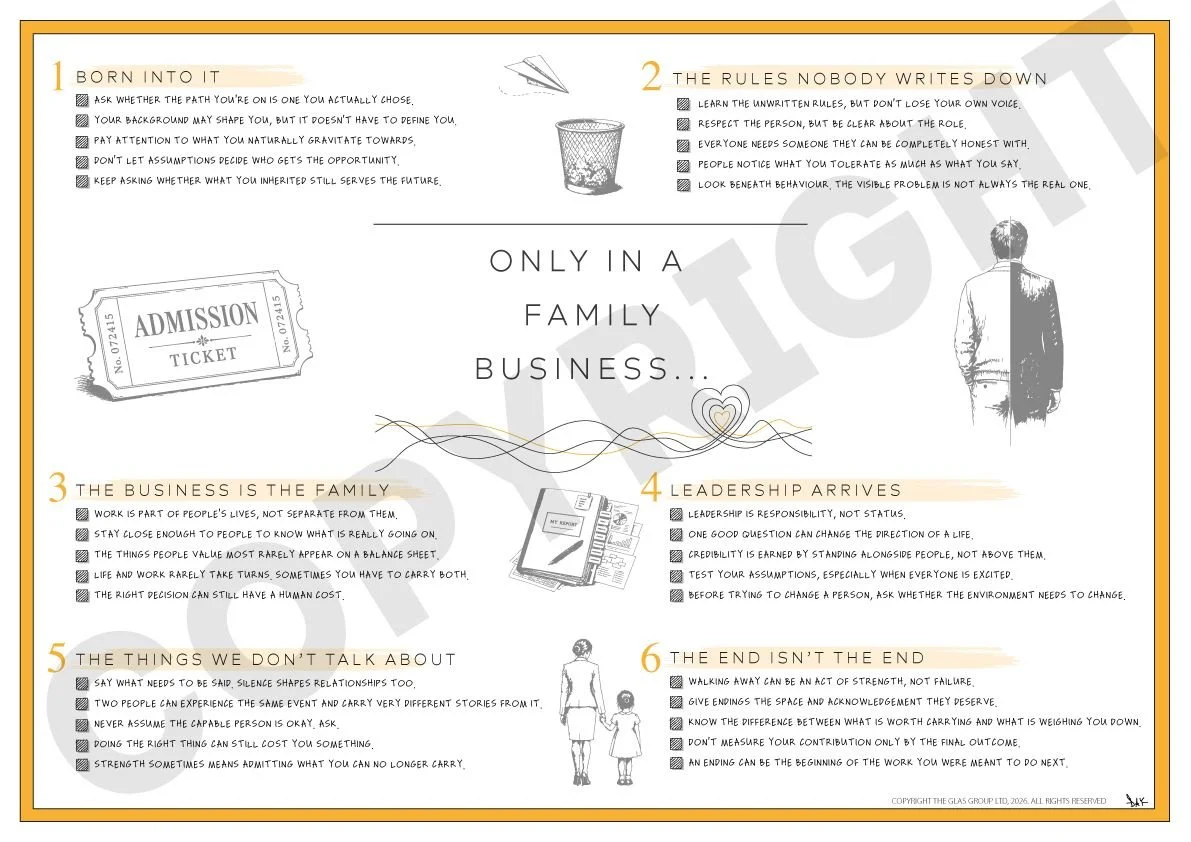
The visual connects strongly with GLAS through awareness, identity, and reflection. Family businesses often operate within deeply established patterns, where expectations, traditions, and unwritten rules influence how people think and behave. The themes of questioning inherited paths and looking beneath visible behaviour align with Harnessing Awareness and Art of Reflection. GLAS encourages individuals to recognise which beliefs and expectations genuinely reflect their values and which they may have simply inherited, creating space for more conscious choices.
The visual also reflects the importance of relationships, communication, and leadership within GLAS. In a family business, professional decisions can carry personal consequences, making it difficult to separate business responsibilities from emotional connections. Themes such as honest conversations, understanding different perspectives, and leading through responsibility rather than status connect with Shaping Relationships and Strong Connections. Through a GLAS lens, effective leadership involves understanding the impact of our decisions on others, challenging assumptions, and creating the conditions for trust, clarity, and accountability.
Finally, Only in a Family Business reinforces the GLAS principle that sustainable growth requires alignment between personal values, relationships, and professional direction. The visual acknowledges that doing the right thing can come at a cost, that people sometimes need to step away from responsibilities, and that an ending can create space for something new. GLAS supports this process by helping individuals reflect on what matters, establish appropriate boundaries, and make intentional decisions about the future. In family businesses, this means building a legacy that is not defined solely by what is preserved, but by how people grow, how relationships are sustained, and how the business evolves for the next generation.
-
now 4 sujggestions on hopw to use it
1. Family Business Workshops – Use the visual to facilitate discussions between family members about inherited expectations, unwritten rules, leadership responsibilities, and the challenges of balancing family relationships with business decisions.
2. Personal Reflection – Encourage family members to reflect individually on their roles, values, and ambitions, identifying which expectations they have chosen and which they may have simply inherited.
3. Leadership and Succession Planning – Use the six themes to guide conversations about future leadership, generational transitions, decision-making, and preparing the next generation to take responsibility.
4. Professional Adviser Conversations – Share the visual with family business owners and their advisers to explore the human dynamics behind business challenges, helping uncover underlying tensions, improve communication, and support more sustainable decisions.
-
now 4 next steps woth glas
1. Awareness – Identify the inherited beliefs, unwritten rules, and family expectations influencing how you think, lead, and make decisions.
2. Reflection – Consider whether your current role and responsibilities align with your values, strengths, and future ambitions, rather than simply following tradition.
3. Relationships – Create space for honest conversations, listen to different perspectives, and address tensions before they affect family relationships or business performance.
4. Intentional Direction – Agree on the future you want to build together, clarify responsibilities, and make conscious decisions that support both the business and the people behind it.
